

Snow anchors are specialist pieces of winter climbing and mountaineering gear used to create secure protection in snow. They are not a one-size-fits-all purchase: the right choice depends on the terrain, the snow conditions and how you intend to use the anchor system.
If you are comparing snow anchors for the first time, it helps to think about where they will be used, how easy they are to place and retrieve, and how much confidence you need from the snowpack. Because performance in snow is highly variable, careful product-page checking matters as much as the broad type of anchor.
For buyers replacing an older item, the main question is often whether the new option suits the same style of winter climbing or whether a different design would be easier to use in the conditions you actually encounter.
Compare Snow Anchors


As an Amazon Associate we earn from qualifying purchases.
What should I look for in a snow anchor?
The best starting point is to match the anchor to the snow conditions and the kind of protection you expect to place. A more compact anchor may be easier to carry, while a larger or more specialised design may offer better holding potential in suitable snow. The trade-off is usually between portability, ease of placement and confidence in the placement once loaded.
Specifications vary by model, so always check the individual product page before buying.
| Feature | What it means | Why it matters | What to check |
|---|---|---|---|
| Anchor type | The general design and how it is placed in snow | Affects ease of use, carrying convenience and suitability for different snow conditions | Whether the design matches your intended winter climbing or alpine use |
| Size and packability | How much space the anchor takes in a pack | Important on longer routes or when carrying several pieces of protection | Overall shape, weight information and how easily it stows with other gear |
| Placement style | How the anchor is inserted or arranged in the snow | Influences speed, confidence and how much practice is needed | Whether the design is straightforward for your experience level |
| Retrieval and reuse | How the anchor comes out after loading | Affects efficiency and whether the item is convenient for repeated use | Any product details about removal, re-use or carrying setup |
| Compatibility with your system | How it works with the rest of your climbing kit | An anchor is only useful if it fits your ropes, slings and intended anchor-building approach | Attachment points, orientation and any stated system requirements |
Key decision criteria
Intended terrain
Think first about the snow and the route style. Some anchors are chosen for more secure placements in firm snow, while others may suit less demanding situations where speed and simplicity matter more. The key trade-off is between versatility and specialisation.
Ease of placement
In winter climbing, an anchor that is awkward to place can be less useful even if it sounds technically impressive. Look for a design you can place with control while wearing gloves and with limited time. What matters is not just the anchor itself, but how predictable it feels in real use.
Carried weight and bulk
Weight and packability matter because snow anchors are often part of a larger rack. A lighter or flatter option can be appealing, but only if it still suits the conditions you expect. If you are building a minimal kit, every item should earn its place.
System compatibility
Check how the anchor connects into the rest of your rigging. Different users may prefer different attachment styles or orientations, and those details affect convenience as well as confidence. Do not assume two products that look similar will behave the same way in a real anchor system.
Types and variants
Snow anchors are usually chosen more by function than by brand style. Broadly, buyers are comparing designs that prioritise faster placement, more secure holding in appropriate snow, or easier carrying on long days. That means the right option is often the one that best fits your usual terrain rather than the one with the most specialised appearance.
If you are uncertain, start with the simplest design that clearly suits your planned use. More complex or specialised options may be worthwhile, but only if you understand how and when they are intended to be used.
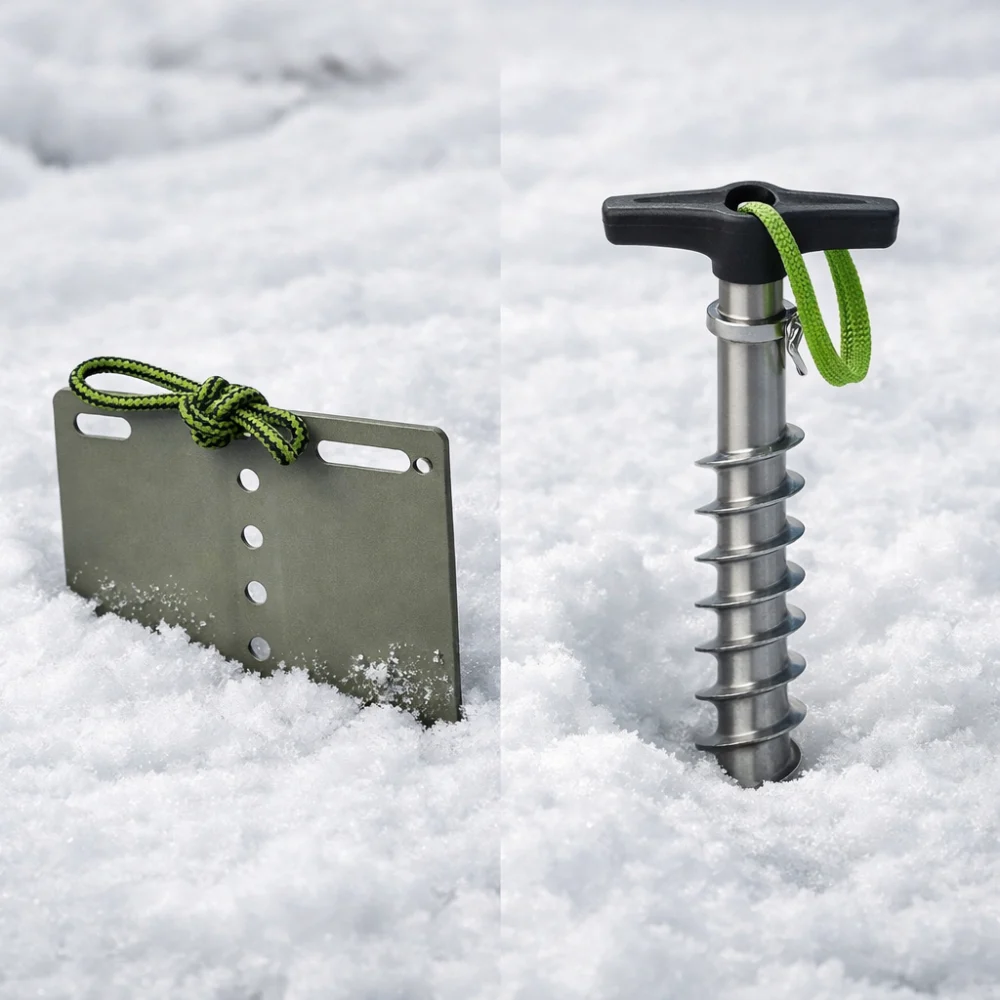
Which snow anchor suits which buyer?
| Buyer need | What usually matters most | Helpful trade-off to consider |
|---|---|---|
| Beginner in winter mountaineering | Simplicity, clear placement and straightforward handling | Choose ease of use over a more complex design that may be harder to place confidently |
| Experienced climber | Compatibility, efficiency and performance in the conditions you expect | A more specialised option may be worthwhile if it suits a known style of use |
| Lightweight kit focus | Packability and carrying comfort | Smaller or lighter gear can be convenient, but not if it compromises suitability for the snow |
| Replacing older gear | Familiar handling and system fit | It may be better to match your existing setup than to switch to a different style without a clear reason |
Common mistakes and misunderstandings
- Choosing by appearance alone. A snow anchor should be chosen for the snow and the system it will support, not because it looks more robust.
- Ignoring handling with gloves. Small design differences can matter a lot when fingers are cold and dexterity is reduced.
- Assuming every anchor suits every condition. Snow quality changes the usefulness of the anchor dramatically.
- Overlooking the rest of the system. The anchor is only one part of a larger protection setup, so compatibility matters.
Safety and suitability caveats
Snow anchors are used in a demanding environment where conditions can change quickly. Do not assume a product is suitable just because it is listed in the category; check the individual product page and make sure it matches your intended use. If you are new to winter climbing or unsure about selection, choose conservatively and keep your expectations realistic.
Maintenance, storage and lifespan considerations
General care is usually straightforward, but winter gear benefits from being cleaned and dried after use, then stored somewhere dry and uncluttered. Check for wear, damage or distortion before you rely on any anchor again. How long the item remains suitable depends on use, care and the specific design, so condition matters as much as age.
How to compare options efficiently
- Start with the type of snow and terrain you expect to use it on.
- Compare the anchor design for ease of placement and retrieval.
- Check how it fits your existing rope, sling or anchor-building approach.
- Look at packability and handling, especially if you carry several items.
- Read the individual product information carefully before deciding.
Summary buyer decision checklist
- Does the anchor suit the snow conditions you usually encounter?
- Is the design practical for your experience level?
- Will it fit comfortably into your wider climbing system?
- Is it convenient to carry for the length of your route?
- Have you checked the individual product page for the details that vary by model?
Frequently asked questions
What is a snow anchor used for?
A snow anchor is used to create protection in snow when climbing or moving through alpine terrain. Its usefulness depends heavily on snow quality and how well the anchor is placed.
Are all snow anchors the same?
No, they can differ in shape, placement method and how they fit into a broader protection system. Those differences affect ease of use and suitability, even when the products seem similar at first glance.
How do I know which one to choose?
Start with the conditions you expect to encounter and the level of simplicity you want. Then compare handling, packability and system compatibility on the product page.
Do I need a specialised snow anchor?
Not always. For many buyers, a straightforward design that matches their use case is a better choice than a more specialised option they will not fully use.
What should I check before buying?
Look at intended use, the type of placement, how it carries, and whether it fits your existing kit. Specifications vary by model, so always check the individual product page before buying.
Can I use the same anchor in every snow condition?
That is not a safe assumption. Snow conditions vary too much, and a design that works well in one setting may be less suitable in another.
More Snow Anchors
See all 97 Snow Anchors →


As an Amazon Associate we earn from qualifying purchases.