

Climbing brushes are a small but useful part of bouldering kit, especially when you want to keep holds clean between attempts. They are used to remove chalk build-up, dust and loose debris so the texture of a hold can be used more consistently.
If you are comparing brushes, the main question is usually not whether you need one, but which style feels easiest to use and most effective on the kinds of holds you climb. A good choice depends on the brush head, the stiffness of the bristles, how comfortable the handle is and whether you want a compact brush for a chalk bag or a longer brush for awkward positions.
Because brushes are simple accessories, the differences can look minor at first. In practice, those details affect reach, control and how gently or firmly you can clean different hold surfaces.
Compare Climbing Brushes


As an Amazon Associate we earn from qualifying purchases.
What should you look for in a climbing brush?
The starting point is to match the brush to where and how you climb. For steep indoor problems and hard-to-reach holds, reach and handling can matter as much as bristle type. For regular gym use, a brush that feels comfortable, easy to carry and quick to use may be more practical than one with a more specialised shape.
Specifications vary by model, so always check the individual product page before buying.
| Feature | What it means | Why it matters | What to check |
|---|---|---|---|
| Bristle stiffness | How firm the brush bristles feel in use | Affects how aggressively chalk and debris are removed | Choose a level that suits the holds you use and the finish you want to preserve |
| Brush head shape | The form and size of the brushing surface | Influences reach, control and access to small edges or larger holds | Look for a shape that fits the hold sizes you most often clean |
| Handle design | How the brush is held and guided | A comfortable grip can make brushing easier in awkward positions | Check whether the handle suits one-handed use, packing or clipping storage |
| Overall size | The brush’s physical length and bulk | Impacts portability and reach | Decide whether you want a compact brush or something with extra leverage |
| Intended use | Whether it is aimed at gym, outdoor or general bouldering use | Different settings can favour different levels of stiffness and size | Match the brush to your usual climbing environment |
Key decision criteria explained
Bristle stiffness
Stiffer bristles can move chalk and dirt more quickly, while softer bristles may be better when you want a gentler touch on holds. The trade-off is simple: firmer brushes can feel more efficient, but they may be more than you need for light cleaning.
Think about the holds you use most often. Small crimps, slopers and textured volumes may not call for the same brushing feel, so the right stiffness is often about control rather than brute force.
Reach and control
Brush length and shape affect how easily you can reach high or awkward holds. A compact brush may be convenient to carry, but a longer design can be easier to use without overextending.
If you often climb steep terrain or work problems with tricky body positions, a brush that feels stable in the hand may be more valuable than one that is only small and light.
Comfort and grip
Some brushes are made to be held quickly and cleanly between attempts, while others prioritise a more secure grip. Comfort matters because brushing is usually done repeatedly during a session.
If you have smaller hands, wear gloves for outdoor use, or prefer a quick chalk-bag grab, check whether the shape looks easy to handle without fuss.
Portability
Many buyers want a brush that is easy to carry without adding clutter. Compact size can be useful if you want it in a chalk bag, pocket or small gear pouch.
The compromise is that very compact brushes may give up some reach. If that matters, a slightly larger brush may be the better everyday choice.
Types and variants
Climbing brushes are usually compared by style rather than by complex technical categories. A compact brush is typically chosen for convenience, while a longer brush may suit buyers who want more reach or leverage. Some brushes are shaped for general use, while others are designed to help with access to narrower or harder-to-reach hold areas.
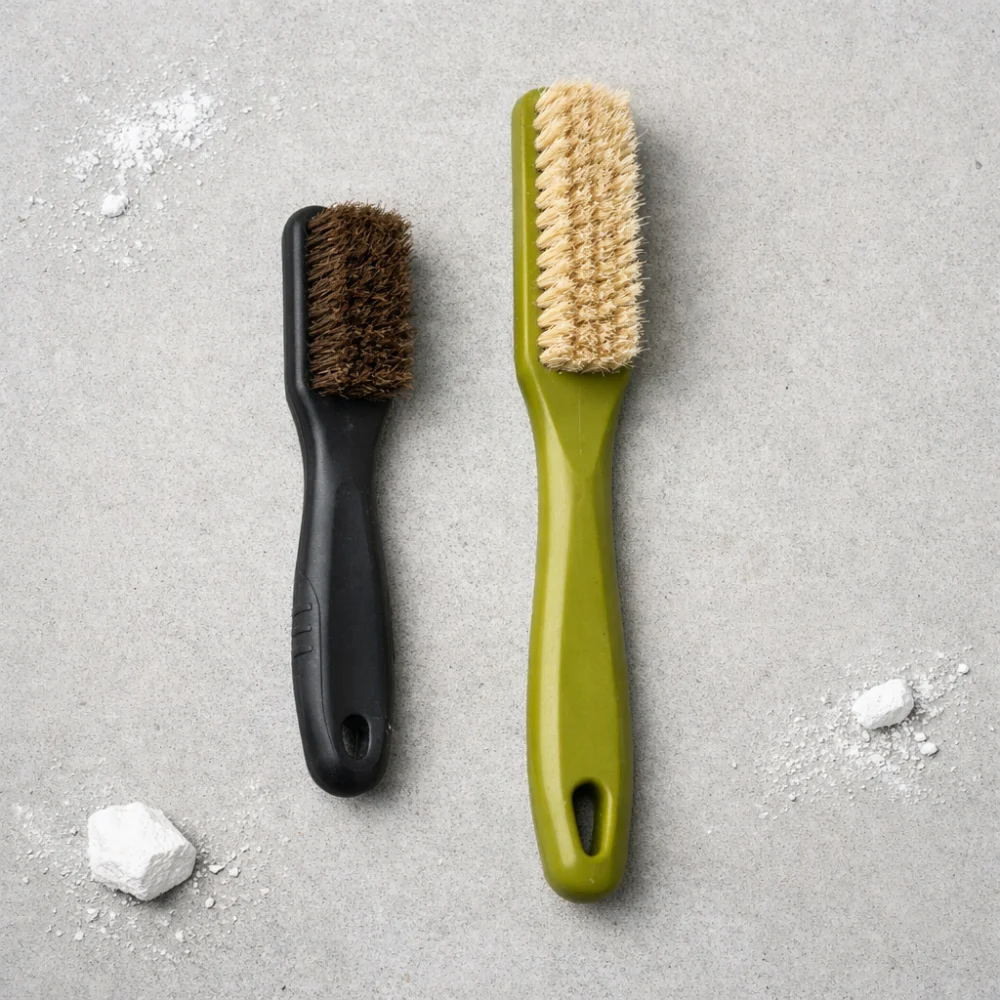
The right variant depends more on climbing style than on advanced specification. For most buyers, the main question is whether the brush feels easy to carry, comfortable to use and suited to the holds they most often clean.
Which brush suits which kind of climber?
| Buyer need | Useful brush traits | Why this helps |
|---|---|---|
| Regular gym boulderer | Comfortable grip, sensible size, easy carry | Simple use between attempts matters more than specialist features |
| Outdoor boulderer | Good reach, reliable control, practical portability | Access and convenience can matter more on awkward rock features |
| Beginner | Straightforward shape, moderate stiffness, easy handling | A simple brush is easier to use and less confusing to compare |
| Frequent project cleaner | Comfortable grip and efficient brushing feel | Repeated use makes ergonomics and control more noticeable |
Common mistakes and misunderstandings
- Assuming all brushes feel the same. Small differences in stiffness, size and shape can change how easy a brush is to use.
- Choosing only by compactness. A very small brush may be handy to carry, but not as comfortable for frequent use.
- Overlooking hold type. A brush that works well on one style of hold may not feel ideal on another.
- Ignoring grip and handling. If the brush is awkward in the hand, you are less likely to use it naturally during a session.
Safety and suitability caveats
Climbing brushes are low-risk accessories, but suitability still matters. A brush should be used as a cleaning aid only, not as a substitute for good climbing judgement or careful route reading. If you climb in different settings, check that the brush size and stiffness suit the holds and surfaces you usually encounter.
Maintenance, storage and lifespan considerations
Brush care is usually simple, but it can still affect value. Removing loose chalk and dirt after use helps keep the bristles in better condition, and storing the brush where it will not get crushed can help preserve its shape. If a brush is used outdoors, it may need a little more attention than one kept mainly for indoor sessions.
Replacement needs are usually driven by wear on the bristles and how often the brush is used. A buyer who climbs frequently may want to pay more attention to handle comfort and brush durability than someone buying an occasional spare.
How to compare options efficiently
- Start with your main use: indoor bouldering, outdoor problems or mixed use.
- Choose the type of brush that suits your reach and carry preferences.
- Compare bristle stiffness, head shape and grip rather than looking only at appearance.
- Think about how often you will use it and whether comfort matters for repeated brushing.
- Check the individual product page for the exact details before deciding.
Summary buyer decision checklist
- Does the brush suit your usual climbing setting?
- Is the bristle feel appropriate for the holds you clean most often?
- Is the size comfortable to carry and use?
- Does the handle or shape feel easy to control?
- Will it fit the way you store or transport your gear?
- Have you checked the individual product page for the exact details?
Frequently asked questions
Do I really need a climbing brush?
Many climbers find one useful, especially for bouldering where holds are brushed often between attempts. It is a simple accessory, but it can make sessions feel more consistent by clearing chalk and dust from holds.
What is the difference between a soft and firm brush?
A softer brush is generally gentler, while a firmer brush can feel more effective for heavier cleaning. The better choice depends on the holds you use and how much control you want when brushing.
Should I choose a small or long brush?
A small brush is easier to carry, while a longer brush can help with reach and leverage. If you often climb steep problems or use awkward positions, reach may matter more than compactness.
Are climbing brushes only for outdoor use?
No, they can be useful in indoor settings as well. Indoor bouldering often involves cleaning chalked holds between attempts, so a brush can be handy in both environments.
How do I know which brush shape is right?
Think about the hold shapes you most often encounter. A shape that feels easy to guide onto small edges, rounded features or larger surfaces will usually be more practical than one chosen purely for looks.
What should I check before buying one as a gift?
Keep it simple and practical. A comfortable grip, sensible size and everyday usability are usually safer choices than a very specialised design if you do not know the recipient’s preferences.
How often will I need to replace a climbing brush?
That depends on use frequency and how the bristles wear over time. If you brush often, look for one that feels durable and easy to handle, then replace it when it no longer cleans effectively.
More Climbing Brushes
See all 94 Climbing Brushes →


As an Amazon Associate we earn from qualifying purchases.