

Women’s cargo outdoor trousers are a practical choice when you want extra pocket space and a bit more coverage than everyday trousers. They can suit walking, light outdoor work, travel and relaxed weekends, but the right pair depends on fit, fabric and how you plan to use them.
This guide focuses on the buying decisions that matter most: comfort, movement, weather suitability and pocket layout. It also helps you separate genuinely useful features from details that sound helpful but may not matter in everyday use.
What should you look for first?
Start with your main use. If you want trousers for walking, prioritise comfort, movement and a fabric that suits the weather you usually face; if you want them for carrying small items, pay close attention to pocket placement and closure type. The main trade-off is usually between utility and simplicity: more pockets and tougher fabric can be handy, but they may add bulk or reduce ease of movement. Specifications vary by model, so always check the individual product page before buying.
| Feature | What it means | Why it matters | What to check |
|---|---|---|---|
| Fit | How the trousers sit at the waist, hips and leg | Affects comfort, movement and how the trousers layer | Waist shape, leg cut, rise and whether the fit is regular, relaxed or tapered |
| Fabric feel | The overall texture and drape of the material | Influences comfort, breathability and how sturdy the trousers feel | Whether the fabric is described as lightweight, durable, stretch or weather-resistant |
| Pockets | Number, size and position of storage pockets | Determines how practical the trousers are for daily carry | Pocket closures, easy access and whether pockets sit where they will not interfere with movement |
| Movement | How easily the trousers flex when walking or bending | Important for active use and all-day wear | Any mention of stretch, articulated shaping or a cut designed for mobility |
| Weather suitability | How well the trousers match your conditions | Helps avoid trousers that feel too warm, too thin or not protective enough | Breathability, quick-dry wording, water resistance or lining where relevant |
| Closure details | Waist and pocket fastenings | Improves fit and helps keep items secure | Elastic, belt loops, zips, poppers or other fastening styles |
Key decision criteria
Fit and shape
Fit affects almost every other part of the buying decision. A roomier cut can feel more forgiving for long days out, while a slimmer shape may feel tidier and less bulky. Check the waist style, leg shape and whether the trousers are designed to sit higher or lower on the body.
Pocket layout
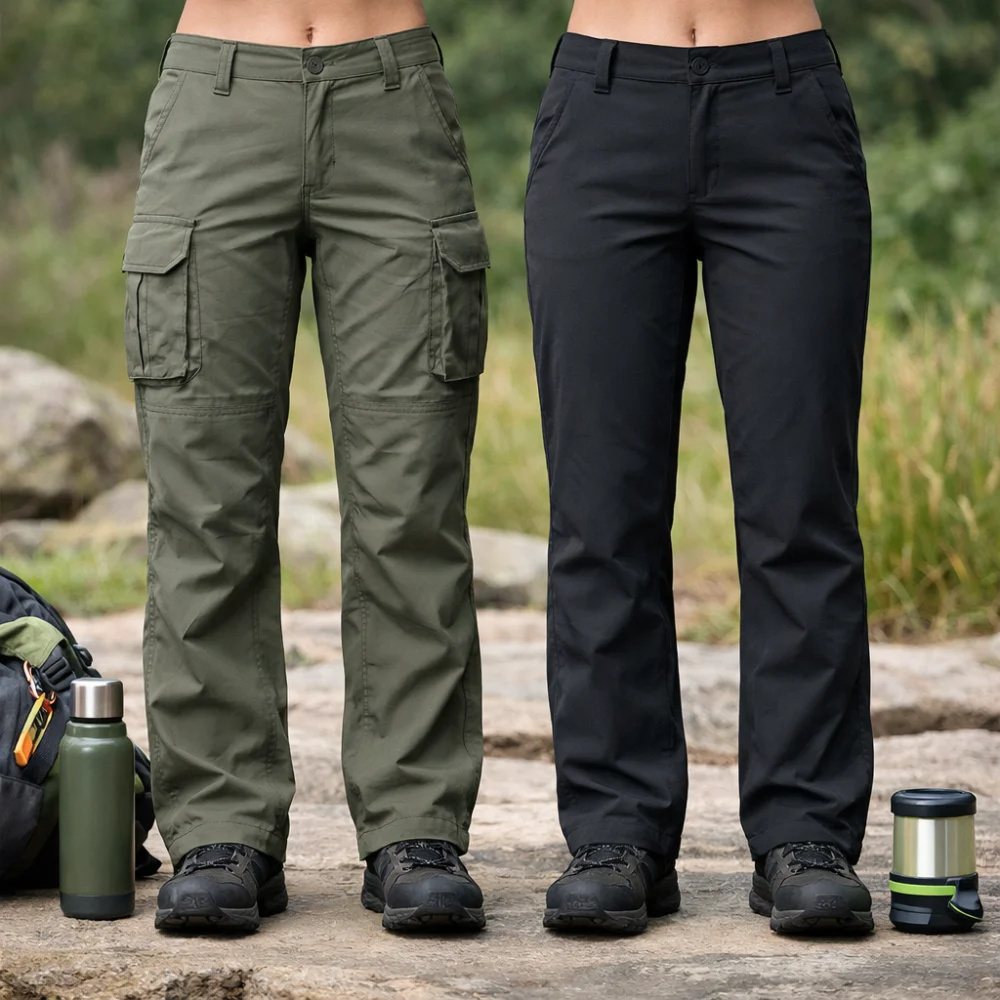
Cargo trousers are defined by their extra storage, but the number of pockets is only part of the story. Consider whether the pockets are easy to reach, whether they close securely and whether they sit flat enough for comfort when walking or sitting. Too many pockets can be useful, but they can also add weight and bulk if you rarely use them.
Fabric and comfort
For outdoor wear, fabric choice often decides whether trousers feel useful or irritating. Lightweight fabrics can be easier for warmer weather or active days, while sturdier materials may suit rougher use better. Stretch can improve comfort, but the amount and feel vary by model.
Weather match
Cargo outdoor trousers are not all designed for the same conditions. Some are better for dry, mild days; others may be chosen for quicker drying or a bit more coverage. If you expect wet or cold weather, compare the trousers carefully with the conditions you actually face rather than assuming any cargo style will do everything.
Common types and variants
Within this category, the most relevant differences are usually about cut, fabric and pocket style rather than completely separate product types. Some trousers lean more towards walking and hiking use, with a lighter feel and simpler pocket layout. Others are closer to casual cargo or work-inspired styles, which may feel sturdier but less streamlined for active outdoor use.
Zip-off styles can also appear in outdoor trouser ranges, but they are worth considering only if you want flexibility across changing conditions. Their main advantage is adaptability; their main limitation is that the design may feel less simple than a standard trouser.
Which features suit different buyers?
| Buyer need | Helpful features | Why they suit the need | Possible drawback |
|---|---|---|---|
| Walking and light outdoor use | Comfortable fit, easy movement, sensible pocket layout | Supports all-day wear without feeling restrictive | May not have the toughest fabric |
| Travel and everyday carry | Secure pockets, easy-access layout, versatile styling | Useful when you want small items close to hand | Extra pockets can add bulk |
| Busier or rougher use | More durable-feeling fabric, secure closures, practical cut | Better suited to frequent wear and handling | May feel heavier or less breathable |
| Warmer-weather outings | Lightweight, breathable or quick-drying fabric | Helps reduce overheating on active days | May feel less protective in cooler conditions |
Common mistakes to avoid
- Choosing by pocket count alone. More pockets are not always better if they are awkwardly placed or rarely used.
- Ignoring the cut. A good fabric can still feel wrong if the waist, hips or leg shape do not suit you.
- Overestimating weather performance. Cargo trousers are often practical, but they are not automatically warm, waterproof or windproof.
- Assuming one size label will work across every style. Compare the individual product page details rather than relying on the category name.
Safety and suitability checks
Think about the environment you will actually wear them in. For uneven ground, long walks or active use, comfort and freedom of movement matter as much as storage. For colder, wetter or more exposed conditions, check whether the trousers are intended for that use instead of assuming a cargo style will cover every situation.
It is also worth considering whether a cargo pocket layout could snag, feel bulky or get in the way during your chosen activity. The right pair should support the activity, not distract from it.
Care, storage and lifespan considerations
General care can affect how long trousers stay comfortable and presentable. Check whether the fabric is likely to need simple washing and whether any finish or stretch content may affect how you dry or store them. If you expect frequent outdoor use, it can be worth choosing a pair that seems easy to keep clean and comfortable over time.
How to compare options efficiently
- Decide where and how you will wear them most often.
- Choose the fit and cut that matches your comfort preferences.
- Compare pocket layout, fabric feel and movement.
- Check whether the trousers suit the weather and level of activity you expect.
- Read the individual product page carefully before choosing.
Summary buyer decision checklist
- Does the fit suit your waist, hips and preferred leg shape?
- Are the pockets genuinely useful, secure and comfortable?
- Does the fabric sound right for your weather and activity level?
- Will the trousers move well enough for walking or other outdoor use?
- Do any closures, stretch details or linings suit your needs?
- Have you checked the individual product page for the exact specification?
Frequently asked questions
Are cargo outdoor trousers good for walking?
They can be, especially if you want practical pockets and a comfortable fit for general walking. The main thing to check is whether the cut allows easy movement and whether the pockets sit comfortably when you are active.
What matters more: pocket count or pocket design?
Design usually matters more. A smaller number of well-placed, secure pockets is often more useful than a very high pocket count that adds bulk or awkward placement.
Should I choose lightweight or sturdier fabric?
That depends on how and where you will wear them. Lightweight fabrics can be better for warmer weather and active use, while sturdier-feeling fabrics may suit frequent wear or rougher conditions.
Are cargo outdoor trousers meant for cold weather?
Not necessarily. Some may feel suitable for cooler days, but cargo styling alone does not mean the trousers are insulated, wind-resistant or waterproof.
Do I need stretch in cargo outdoor trousers?
Not always, but it can improve comfort if you bend, climb stairs, walk far or wear them for long periods. If you prefer a neater or firmer feel, you may be happy with a less stretchy fabric.
What is the biggest buying mistake?
Assuming all cargo trousers are broadly the same. Fit, fabric, pocket layout and weather suitability can vary enough that it is worth checking the details on each product page.
Can cargo outdoor trousers work for travel as well as outdoor use?
Yes, if the pocket layout and fit suit you. Many buyers want a pair that works in more than one setting, but it helps to choose a style that still feels comfortable when sitting, walking and carrying items.