


Women’s heated jackets are a practical choice when you want extra warmth without adding a lot of bulk. They can be useful for commuting, walking, outdoor work, watching sport or any situation where you spend time in cold conditions and want more control over comfort.
This guide focuses on the buying decisions that matter most: warmth settings, fit, fabric, weather protection and ease of use. It also explains how heated jackets compare with other outdoor layers, so you can decide whether heat is the right feature for your needs.
Compare Women's Heated Jackets


As an Amazon Associate we earn from qualifying purchases.
What should you look for in a women’s heated jacket?
The best starting point is to think about how and where you will wear it. A heated jacket can be a good option if you want targeted warmth and adjustable comfort, but it may not replace a fully waterproof shell or a heavily insulated coat. Specifications vary by model, so always check the individual product page before buying.
Choose the jacket around the main trade-off you care about most: warmth, weather resistance, movement or simplicity. If you expect long periods outdoors in cold air, a jacket with straightforward controls and a comfortable fit matters more than a style that only looks warm. If you mainly want a layer for short trips, lighter construction and easy wear may be more important.
| Feature | What It Means | Why It Matters | What To Check |
|---|---|---|---|
| Heat settings | How the jacket lets you adjust warmth | Different conditions call for different levels of heat and flexibility | Whether the controls are easy to use and suit your routine |
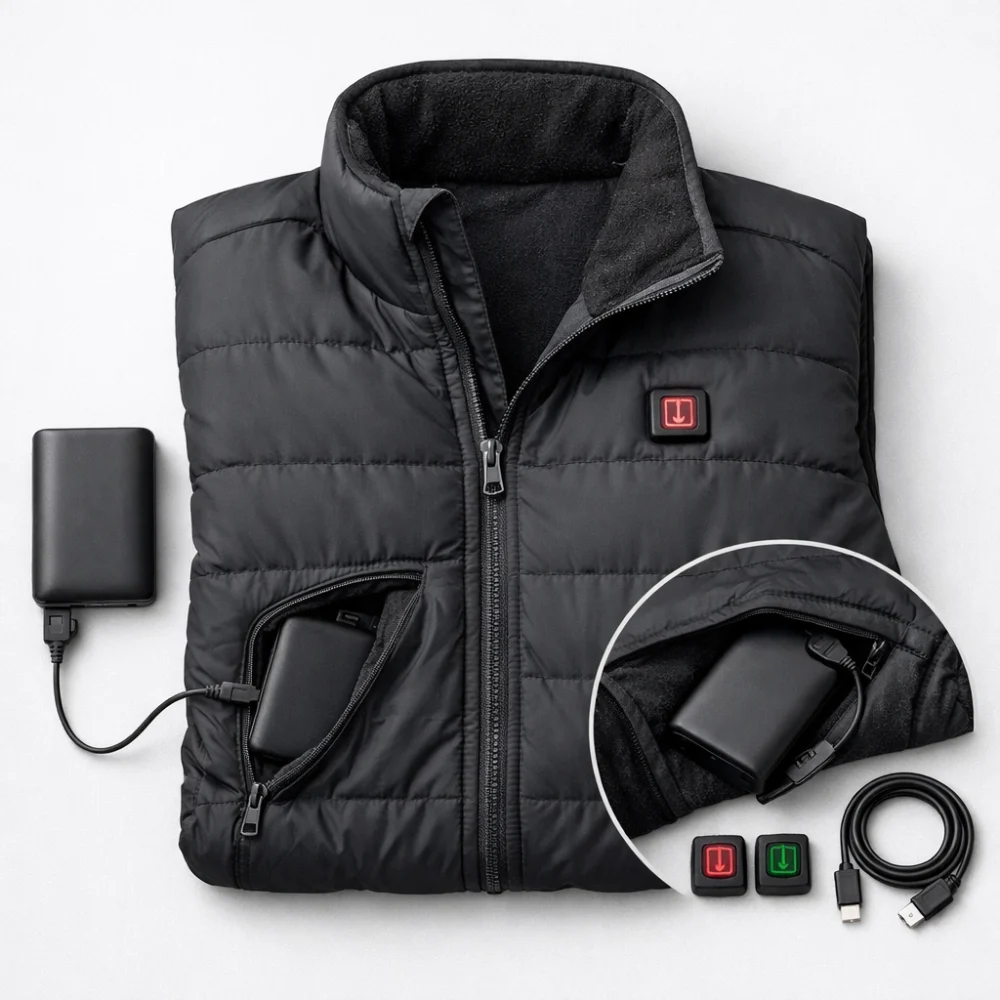
| Power source | How the heating element is powered | Influences convenience and how long you can use the jacket between charges or battery changes | What power system the model uses and how it fits your day |
| Fit and cut | How the jacket sits on the body | Affects comfort, layering and how well heat is retained | Size guidance, room for midlayers and whether the shape suits your movement |
| Outer fabric | The material on the outside of the jacket | Shapes durability, comfort and how the jacket handles wind or light rain | Whether the fabric suits your intended use and weather conditions |
| Weight and bulk | How heavy and compact the jacket feels | Important for all-day wear, travel and layering | Whether you want something light or something with more substantial coverage |
| Care needs | How the jacket is cleaned and stored | Heating components can affect washing and long-term upkeep | Cleaning instructions and whether the design suits the care you are happy to provide |
Key decision criteria explained
Heat control
Heated jackets are designed to give you adjustable warmth, not just a fixed level of insulation. That makes them useful when your body temperature changes during the day or when outdoor conditions shift. Think about whether you want simple controls or a wider choice of settings, then check how easy those controls are to reach when you are wearing the jacket.
Fit and layering
Fit matters because the jacket needs to be comfortable both on its own and over the layers you might wear underneath. A close fit may help retain warmth, but too tight a fit can feel restrictive and may reduce comfort when you move. If you plan to wear a midlayer underneath, allow for that when checking the size information.
Weather protection
Some heated jackets are mainly about warmth, while others may also help with wind resistance or light rain. That difference matters if you expect to wear the jacket outdoors for long periods. If wet weather is a regular concern, make sure you are not relying on heat alone to solve a weather problem that needs a proper outer layer.
Power and convenience
The way a jacket is powered affects how practical it feels day to day. You may care more about where the power unit sits, how easy it is to recharge or replace, and whether the setup is simple to live with. A jacket that is technically warm but awkward to use may be less suitable than a more straightforward one.
Build and finish
Look at stitching, fastenings, pocket layout and overall construction, because these details affect comfort and everyday usability. Heated clothing is often chosen for regular use, so small details can matter more than they first appear. If you are comparing options, think about which features you will notice every time you wear it.
Types and variants you may see
Within this category, the main differences are usually about cut, weight and intended use rather than dramatic style changes. Some jackets are better suited to everyday wear and gentle outdoor use, while others are aimed at colder conditions or more active days. The key is to match the jacket’s overall build to how you plan to wear it.
For some buyers, a lighter heated jacket is attractive because it layers more easily and feels less bulky. For others, a more substantial jacket may be preferable if they want something that feels more like a standalone outer layer. Neither approach is automatically better; the right choice depends on how much warmth you need and how much freedom of movement you want.
Which features suit different needs?
| Buyer need | What to prioritise | Why it helps |
|---|---|---|
| Everyday commuting | Easy controls, comfortable fit, practical pockets | Useful when you want quick warmth without faffing |
| Longer time outdoors | Comfort over time, reliable power setup, weather awareness | Helps the jacket stay useful beyond short bursts of wear |
| Layering for cold walks | Room for midlayers and a cut that does not feel restrictive | Lets you adapt to changing temperatures |
| Gift buying | Flexible fit, straightforward use, simple care information | Makes the jacket easier to choose when preferences are less certain |
Common mistakes to avoid
- Assuming heat replaces all insulation. A heated jacket can add warmth, but it still needs to suit the weather and the activity.
- Ignoring fit. If the jacket is too tight, it may be uncomfortable with layers underneath; if it is too loose, it may not feel as effective.
- Focusing only on warmth. Weather resistance, comfort and ease of use can matter just as much in real life.
- Overlooking care requirements. Heating components can affect washing and storage, so it is worth checking the care guidance before you buy.
Safety and suitability caveats
Heated jackets are a clothing choice, but they still need sensible matching to the person and the environment. Check the product information for guidance on intended use, care and power setup, especially if the jacket will be worn for longer periods or in damp conditions. If you are unsure whether a heated layer is enough for your activity, think of it as one part of a clothing system rather than a complete solution.
Maintenance and storage considerations
General care can make a difference to how convenient a heated jacket feels over time. Pay attention to cleaning instructions, battery or power handling where relevant, and how the jacket should be stored when not in use. A design that is easy to look after is often better for regular wear than one that needs more careful handling than you want to provide.
How to compare options efficiently
- Start with your main use: commuting, walking, outdoor work or casual cold-weather wear.
- Decide how much warmth control you want and whether simple settings are enough.
- Check fit carefully, especially if you plan to wear layers underneath.
- Compare weather protection, weight and comfort rather than looking at heat alone.
- Read the individual product page for power, care and any model-specific details.
Summary buyer decision checklist
- Will I wear it as a standalone outer layer or over other clothing?
- Do I need adjustable heat, or just a warm jacket for occasional use?
- Is the fit suitable for my body shape and any layers underneath?
- Does the jacket suit the weather conditions I expect to face?
- Am I happy with the care and storage needs?
- Have I checked the individual product page for model-specific details?
Frequently asked questions
Are heated jackets suitable for everyday wear?
They can be, especially if you want flexible warmth for commuting or short periods outdoors. The main question is whether the jacket’s fit, weight and style suit the way you dress day to day. If you want something very simple and low-fuss, compare the controls and care requirements carefully.
Do heated jackets replace a winter coat?
Not always. A heated jacket may add useful warmth, but it does not automatically provide the same weather protection or all-round insulation as a heavier coat. It is better to think about the jacket you need for the conditions you actually face.
What matters more: heat settings or fit?
Both matter, but fit often determines whether the jacket is comfortable enough to wear often. A jacket with excellent heat control is less useful if it feels restrictive or awkward over your normal layers. Start with fit, then compare the heating features.
Should I choose a lighter or more substantial jacket?
That depends on whether you prioritise layering and ease of movement or a more standalone outer layer. Lighter jackets are often easier to wear under another coat or for active use. More substantial jackets may feel better if you want something that does more of the outer-layer job on its own.
How important is weather resistance?
Very important if you expect wind or light rain. Heat helps with comfort, but it does not solve every weather problem. If damp conditions are likely, check whether the jacket offers enough protection for your plans.
What should I check on the product page before buying?
Check fit guidance, heat controls, power details and care instructions first. These are the details most likely to affect whether the jacket feels practical in everyday use. Specifications vary by model, so always check the individual product page before buying.
Check the power arrangement before choosing
Power details can affect both convenience and the total weight you carry. Check whether the product information says a power unit is included, how it is charged, and where it sits when worn; do not assume that a separate battery or charger will be compatible.
If you are comparing stated usage times, check the conditions behind them, such as the selected heat setting. The result may differ with use, so consider whether the arrangement suits the length and type of outings you have in mind.
More Women's Heated Jackets
See all 41 Women's Heated Jackets →


As an Amazon Associate we earn from qualifying purchases.