


Children’s waterproof jackets are a practical choice for wet school runs, walks, club nights and family days outdoors. The main challenge is not finding a jacket that says “waterproof”, but choosing one that suits how much rain, movement and layering your child is likely to face.
This guide helps you compare the features that matter most without getting distracted by details that may not make much difference in real use. It also explains where a lighter packable jacket makes sense and where a more robust style may be the better fit.
Specifications vary by model, so always check the individual product page before buying.
Compare Children's Waterproof Jackets


As an Amazon Associate we earn from qualifying purchases.
What should you look for in a children’s waterproof jacket?
The best starting point is to match the jacket to the child’s likely use. A simple waterproof shell may be enough for showers and commuting, while a more featureful jacket may suit longer outdoor sessions or mixed weather. The main trade-off is usually between packability, warmth, durability and weather protection.
| Feature | What it means | Why it matters | What to check |
|---|---|---|---|
| Waterproofing | How well the jacket resists rain and wet conditions | Determines how suitable it is for steady rain or short showers | Look for the product description and any stated waterproof construction or fabric details |
| Breathability | How easily moisture can escape during active wear | Helps reduce clamminess when children are moving around | Check whether the jacket is described as breathable or better suited to active use |
| Fit and layering room | How the jacket sits over school clothes or mid-layers | A jacket that is too tight may feel restrictive, while one that is too loose may be awkward | Consider the intended layer underneath and the child’s usual size |
| Hood and closure details | Features that help keep rain out | Useful in windy, changeable weather and on wet school runs | Check the hood style, zip closure and whether cuffs or hems help seal out spray |
| Packability | How compact the jacket is when not being worn | Handy for keeping in a school bag or taking on trips | Look for packable or lightweight designs if portability matters |
| Durability | How well the jacket may stand up to frequent use | Important for active children and repeated wear | Review fabric description, reinforcement details and how the jacket is intended to be used |
Key decision criteria explained
How much weather protection do you actually need?
For everyday use, many buyers want reliable protection from rain rather than the most technical shell available. A lighter jacket can be easier to carry and more comfortable, but it may be less suitable for extended time outdoors. A more substantial jacket may feel reassuring in worse weather, but can be bulkier and less flexible.
Is breathability important?
It becomes more relevant as the child gets warmer or more active. If a jacket is worn mainly for short journeys, breathability may matter less than straightforward rain protection. If it is for walking, playground use or active days out, it is worth checking whether the jacket is designed to feel less stuffy.
What fit works best for your child?
Children’s jackets need enough room for movement and for a layer underneath, but they should not be so oversized that sleeves and hems become awkward. Think about whether the jacket is for school uniform, casual wear or outdoor play, because that affects how much room may be useful. A neat fit is often better for everyday convenience, while extra room can help with layering in colder weather.
How important are small practical details?
Details such as a secure zip, hood coverage and easy cuffs can make a jacket more usable day to day. These features are often more important than flashy design points because they affect how well the jacket works in real rain. If a child will put the jacket on and off often, simple fastenings are worth paying attention to.
Types and variants within this category
Lightweight packable jackets
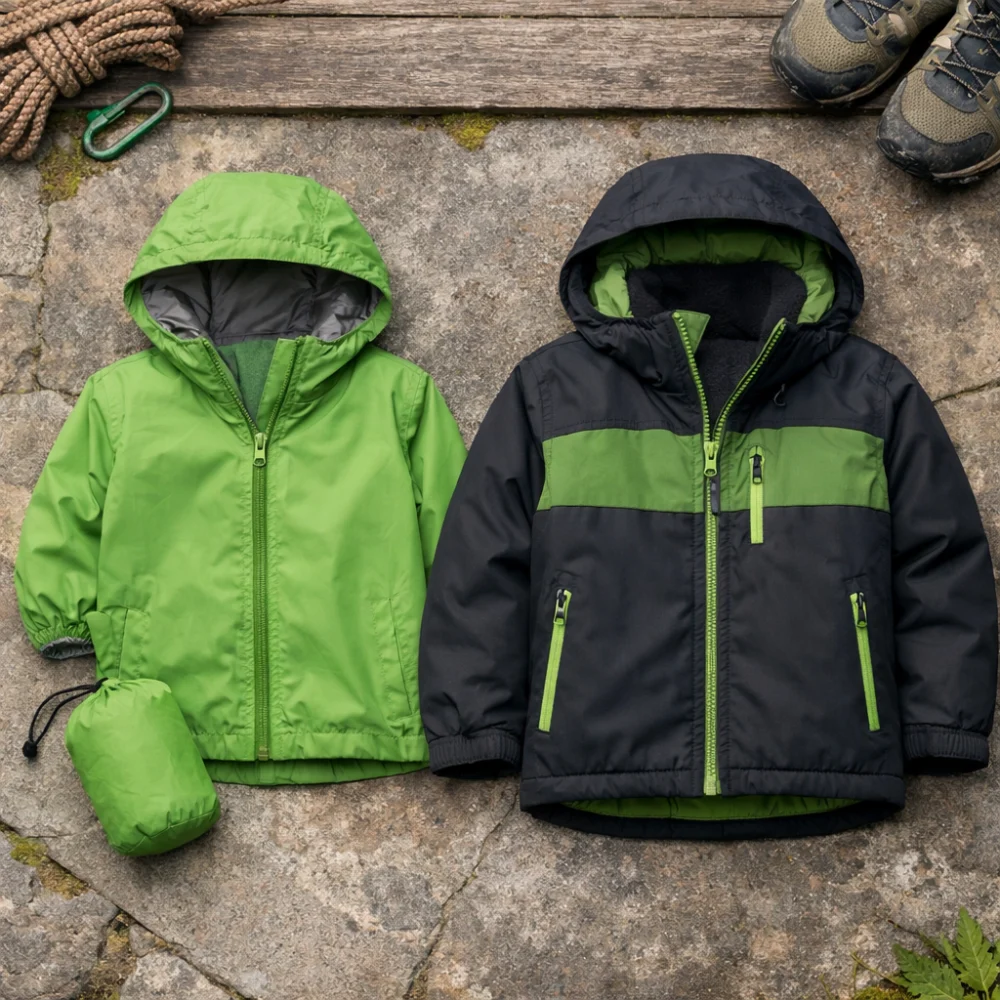
These suit families who want something easy to stash in a bag or keep ready for unexpected showers. They are often practical for school, travel and occasional wet weather. The main limitation is that they may feel less substantial than heavier designs.
Everyday hooded rain jackets
This is the broad, practical option for regular wet-weather use. It usually balances rain protection and easy wear, which makes it a sensible starting point for many children. The trade-off is that it may not be as specialised for warmth or long periods of heavy rain.
More robust outerwear styles
Some jackets are designed to feel sturdier and more protective for frequent outdoor use. These can suit active children who spend more time outside in changeable weather. They may be less compact and may feel warmer than a lightweight rain shell.
Which jacket suits which kind of buyer?
| Buyer need | What to prioritise | Why |
|---|---|---|
| School run and everyday carry | Light weight, easy fastenings, hood coverage | Convenience matters when the jacket is used often and carried regularly |
| Frequent outdoor play | Durability, comfortable movement, reliable rain protection | Active use can put more stress on the jacket |
| Trips and holidays | Packability, versatility, easy layering | A jacket that stows away neatly is useful when weather changes |
| Wet and windy conditions | Better coverage, secure hood, closer attention to construction | More exposure usually means weather protection matters more than compactness |
Common mistakes to avoid
- Choosing on appearance alone: a jacket that looks good may still be uncomfortable or awkward if the fit and features are wrong.
- Overlooking layering: if there is no room for a jumper or fleece, the jacket may be less useful in colder weather.
- Assuming all waterproof jackets feel the same: some are lighter and more portable, while others are more substantial and better suited to frequent use.
- Ignoring how often it will be worn: a jacket for occasional showers can be different from one used several times a week.
Safety and suitability checks
Check that the jacket is suitable for the child’s age, size and intended use. If it will be used in darker weather, visibility may matter as part of your wider clothing choice, but that depends on the individual product and the rest of the outfit. Do not assume a general “waterproof” description tells you everything; the product page should give the detail you need.
Maintenance and storage
Most children’s waterproof jackets are easier to keep useful when they are cleaned and stored according to the care guidance for that specific product. Dirt can reduce comfort and may affect how a jacket performs over time, so it is worth checking the care label before buying. If the jacket is likely to live in a school bag or car, look for something that will tolerate being folded and carried regularly.
How to compare options efficiently
- Start with the main use: school, play, travel or general wet-weather wear.
- Decide whether you want a lightweight packable style or a more substantial everyday jacket.
- Compare weather protection, fit, breathability and practical details such as the hood and fastening.
- Check whether there is enough room for the layers your child will actually wear.
- Read the individual product page carefully before making a final choice.
Summary buyer decision checklist
- Does the jacket suit the weather and activity you have in mind?
- Will it fit comfortably over the layers your child usually wears?
- Is it light enough, or robust enough, for how it will be used?
- Are the hood, zip and cuffs practical for everyday wear?
- Have you checked the individual product page for the most important details?
Frequently asked questions
What is the main difference between a lightweight waterproof jacket and a heavier one?
A lightweight jacket is usually easier to carry and better for occasional showers or travel. A heavier style may feel more substantial and may be better suited to frequent outdoor use. The right choice depends on whether convenience or a more protective feel matters more.
Should I size up for a child’s waterproof jacket?
Sometimes a little extra room is useful if the jacket will be worn over jumpers or school uniform. Too much extra room can make sleeves and hems awkward, so it is better to think about layering rather than simply choosing the largest size. Check the product page and compare it with the child’s usual fit needs.
Is breathability important for children?
It can be, especially if the jacket will be worn for active play or longer periods outdoors. If the jacket is mainly for short journeys, it may matter less than straightforward rain protection. A breathable design can feel more comfortable when the child moves around a lot.
What features are most useful for school use?
Easy fastenings, a practical hood and a fit that works over school clothes are usually the main things to look for. A jacket that is too bulky can be less convenient in a bag or cloakroom. Simplicity often works well for regular weekday wear.
How do I know if a jacket is suitable for regular use?
Look at the fabric description, construction details and the overall design of the jacket. A jacket intended for frequent wear should feel practical and not overly delicate for the kind of use you expect. Specifications vary by model, so always check the individual product page before buying.
Can one waterproof jacket do everything?
Sometimes a well-chosen jacket can cover a lot of situations, but there is usually a trade-off. A very packable jacket may be less robust, while a sturdier jacket may be less convenient to carry. Think about the most common use rather than trying to cover every possible situation equally.
Check the seams as well as the fabric
Rain protection depends on more than the outer fabric: seams and openings can also affect how a jacket performs in wet conditions. If the jacket is intended for prolonged exposure, check whether the product information describes how seams are finished, as well as the coverage provided by the hood, cuffs and front closure. Descriptions vary by model, so do not assume a particular construction unless it is stated.
More Children's Waterproof Jackets
See all 298 Children's Waterproof Jackets →


As an Amazon Associate we earn from qualifying purchases.