

Women’s insulated trousers are designed for colder conditions when ordinary outdoor trousers may feel too light on their own. They are useful for walking, winter travel, outdoor work, camping and other activities where warmth matters as much as movement.
The right choice depends on how cold it is, how active you will be and how much bulk you are happy to wear. Some options focus on maximum warmth, while others aim for a lighter feel and easier movement.
Because insulation styles vary, it helps to compare the construction and the intended use rather than relying on the product name alone.
What should you look for first?
Start with the level of warmth you actually need, then think about movement, weather exposure and layering. If you are active, a lighter insulated trouser may be more comfortable than a heavily padded one. If you spend longer periods standing still or in cold wind, a warmer build may be the better fit. Specifications vary by model, so always check the individual product page before buying.
| Feature | What it means | Why it matters | What to check |
|---|---|---|---|
| Insulation level | How much warmth the trouser is designed to provide | Affects comfort in cold conditions and how bulky the trousers feel | Look for the product description’s warmth focus and intended season |
| Fit and leg shape | How closely the trousers follow the body and lower leg | Changes freedom of movement and what layers can fit underneath | Check fit notes, waistband style and whether the cut suits your activities |
| Weather resistance | How well the fabric handles wind, light moisture or damp conditions | Important if you will be outdoors for long periods | Read the fabric description and any notes on resistance or waterproofing |
| Breathability | How readily heat and moisture can escape | Helps reduce clamminess during movement | Consider whether the trousers are for active use or for lower-intensity wear |
| Packability and bulk | How easy the trousers are to carry or stow | Matter for travel, layering or changing conditions | Check if the pair is described as lightweight, padded or more substantial |
| Adjustability | Waist, ankle or closure features that help shape the fit | Improves comfort and can help keep cold air out | Look for waistband type, cuffs and any adjusters mentioned on the product page |
Key decision criteria
Warmth versus mobility
Insulated trousers can feel very different depending on how much padding or lining they use. More warmth is useful for stillness, cold mornings and winter use, but it may reduce freedom of movement or feel too warm once you are active. Think about whether you need a trouser for layering, all-day wear or short bursts outdoors.
Fit around layers
Some buyers want room to wear thermal leggings underneath, while others want the trousers to work as the warm layer itself. A close fit may feel neater and reduce draughts, but a looser cut can be easier to move in and more flexible over base layers. Check the shape through the waist, hip, thigh and lower leg rather than assuming all insulated trousers fit the same way.
Outer fabric and weather use
Insulated trousers are not all made for the same conditions. Some are mainly for warmth, while others are better suited to windy or damp outdoor use. If you expect changeable weather, it is sensible to read the fabric notes carefully and decide whether you need more than simple insulation.
Breathability and comfort
Warm trousers that hold heat well may also trap moisture when you move. That can be fine for low-intensity wear, but less comfortable on steeper walks or more active days. A good balance depends on how hard you expect to work while wearing them.
Waist and fastening details
Comfort often comes down to the waistline. Elasticated waists can be easier for relaxed wear, while other designs offer a firmer hold or more adjustment. Look at the fastening style if you plan to wear the trousers for longer periods or over different layers.
Common types and how they differ
Within this category, the main differences usually come from how the trousers are built rather than from dramatic sub-types.
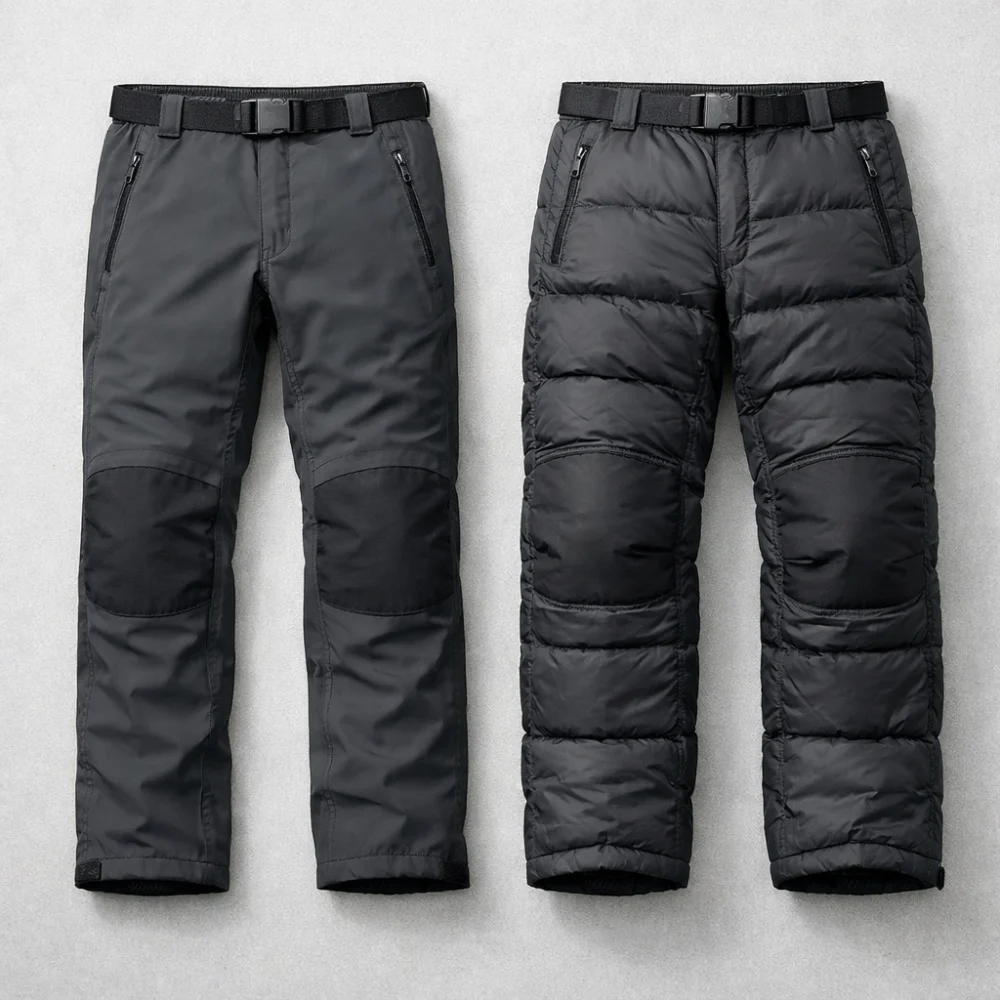
- Lightly insulated styles may suit people who want extra warmth without too much bulk. Their limitation is that they may not be enough for very cold, still conditions.
- Heavier insulated styles suit colder weather or lower-activity use. Their limitation is reduced breathability and a fuller feel.
- Fleece-lined or thermal-lined styles can feel comfortable for everyday outdoor wear. Their limitation is that lining alone does not guarantee weather resistance.
- Padded winter styles are aimed more squarely at cold conditions. Their limitation is that they can be less versatile when temperatures rise or movement increases.
Which style suits which buyer?
| Buyer need | More suitable features | Why | Possible trade-off |
|---|---|---|---|
| Walking in cold weather | Balanced insulation, good movement, comfortable waistband | Helps keep warmth without making each step feel restricted | May offer less warmth than a heavier winter design |
| Standing still for longer periods | Higher warmth focus, fuller coverage, draught-reducing fit | Comfort matters more when body heat is not generated through movement | Can feel bulky during active use |
| Travel or commuting | Moderate insulation, easier layering, simple care | Useful for changing temperatures and mixed indoor-outdoor wear | May not be warm enough for the coldest days |
| General winter casual wear | Comfort-first fit, soft lining, relaxed shape | Prioritises everyday wearability | Less technical weather protection |
Common mistakes to avoid
- Choosing warmth without considering activity level. A very warm pair may be ideal for stillness but too hot for energetic walking.
- Assuming all insulated trousers resist weather equally. Warmth and weather resistance are not the same thing.
- Ignoring fit over layers. If you plan to wear thermals underneath, check that the cut allows for it.
- Overlooking leg shape and cuff finish. These details affect comfort, draught control and how well the trousers sit with footwear.
- Focusing only on the insulation label. Fabric, lining, breathability and fit all influence real-world comfort.
Safety and suitability notes
Choose trousers that suit the conditions you expect, especially if you will be outdoors for longer periods or in cold, damp or windy weather. If you need protection from wet conditions, check whether the product is described as water-resistant or waterproof rather than assuming insulation alone will be enough. For any product, the individual listing is the best place to confirm the intended use and construction.
Maintenance and lifespan considerations
Insulated trousers often benefit from simple care: follow the care label, avoid storing them damp and keep insulation from being compressed for long periods if possible. Some styles may be easier to clean and dry than others, especially if they use padding or specialist outer fabrics. Think about how often you expect to wear them, because everyday use will usually place more demands on seams, linings and fastenings than occasional wear.
How to compare options efficiently
- Decide when and where you will wear them most often.
- Choose the insulation level that matches your activity and temperature range.
- Check the fit, especially if you plan to layer underneath.
- Compare the outer fabric and any weather-resistance notes.
- Look at waist, cuff and leg-shape details for comfort and practicality.
- Read the individual product page carefully before making a final choice.
Summary buyer checklist
- Do I need extra warmth, or mainly light insulation?
- Will I be active, standing still or doing a mix of both?
- Is there enough room for base layers if I want them?
- Does the product suit the weather conditions I expect?
- Are the waist and leg shape likely to feel comfortable for longer wear?
- Is the care and storage routine practical for me?
Frequently asked questions
Are women’s insulated trousers the same as thermal trousers?
Not always. The terms are often used in similar ways, but one product may rely more on lining, another on padding, and another on a specific thermal construction. It is worth reading the description rather than assuming they mean exactly the same thing.
Can I wear insulated trousers for walking?
Yes, if the level of warmth and the fit suit the pace of the walk. For more active use, many people prefer a lighter insulated style so they do not overheat. For slower walks or colder days, a warmer pair may be more comfortable.
Do insulated trousers replace base layers?
Sometimes, but not always. If the trousers are warm enough on their own, you may not need extra layers, yet colder conditions or personal preference may still call for thermals underneath. Check how roomy the fit is if you expect to layer.
Are they suitable for wet weather?
Only if the product information supports that use. Insulation helps with warmth, but it does not automatically mean the trousers will handle rain or prolonged damp conditions well. Look for weather-resistance details on the individual product page.
How should I choose between a fitted and a looser style?
A fitted style can feel neater and may help reduce draughts, while a looser style can feel easier over layers and less restrictive. The best choice depends on whether you value freedom of movement, layering space or a closer everyday fit.
What matters most if I want one pair for different uses?
Look for a balanced design with moderate insulation, comfortable movement and straightforward care. That type of trouser is often more versatile than a very specialised cold-weather option. The trade-off is that it may not excel in the harshest conditions.