

Mountaineering crampons are chosen for a specific mix of boots, terrain and use case, so the right option depends less on a brand name and more on fit and purpose. If you are comparing them for winter walking, alpine approaches or more technical mountaineering, the details that matter can be easy to overlook.
This guide focuses on the practical differences buyers usually need to compare: binding type, front-point style, rigidity and compatibility with your footwear. It is meant to help you narrow the field before checking the individual product page.
Because crampons are used in cold, steep and sometimes technical conditions, it is worth being precise about what you need and what your boots can support. Specifications vary by model, so always check the individual product page before buying.
Compare Mountaineering Crampons


As an Amazon Associate we earn from qualifying purchases.
What should you look for first?
The best starting point is boot compatibility, followed by the type of terrain you expect to use them on. After that, compare the binding system, frame stiffness and point layout, because these features affect how securely the crampons sit on the boot and how they feel in use. A lighter, simpler model may suit general winter hill use, while a more technical design can be better for steeper ground.
The main trade-off is usually between versatility and precision. More adaptable crampons may be easier to live with across different outings, but more specialised designs can feel more secure or controlled for certain terrain.
| Feature | What it means | Why it matters | What to check |
|---|---|---|---|
| Binding style | How the crampon attaches to the boot | Determines whether the crampons suit your footwear and how secure the fit feels | Check the boot types supported by the product page |
| Frame rigidity | How stiff the body of the crampon is | Affects how well it handles different terrain and how stable it feels underfoot | Look for whether the model is described as flexible or rigid |
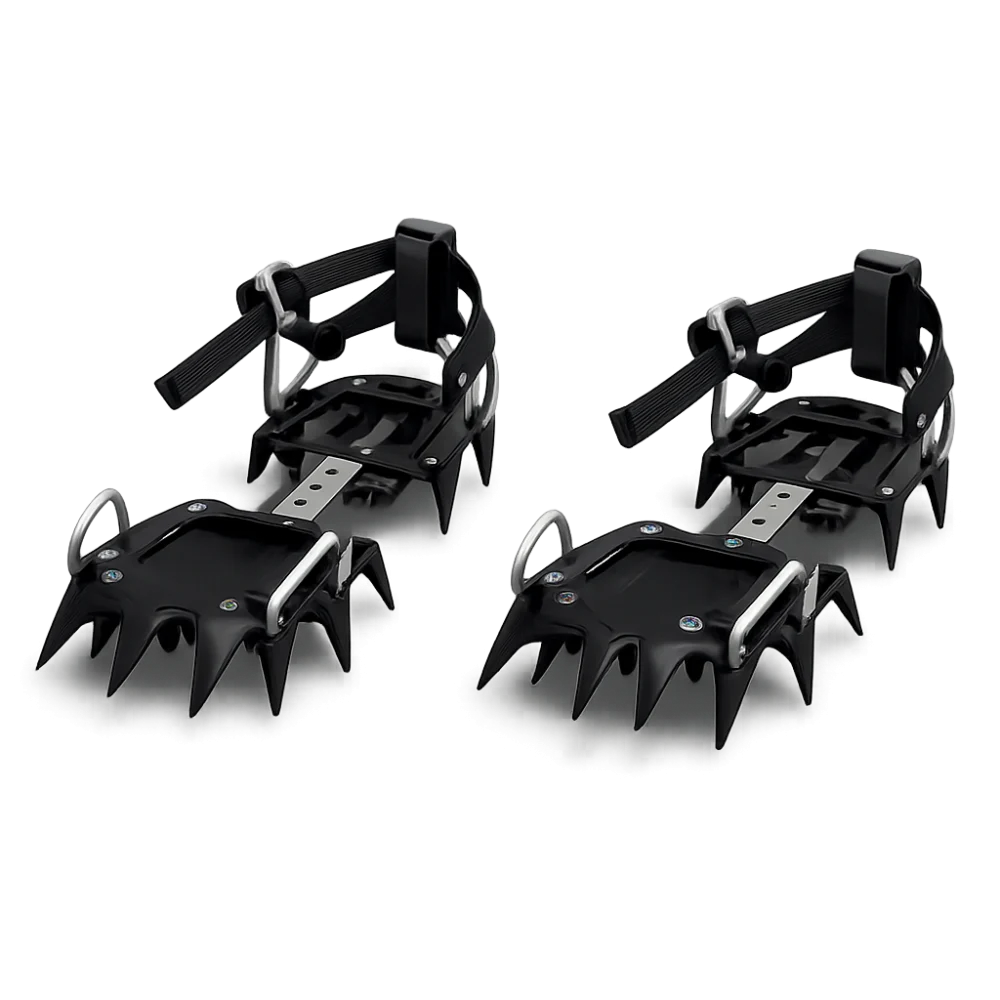
| Front-point layout | The shape and arrangement of the front points | Influences bite, precision and the kind of ground the crampon is intended for | Compare point shape and intended use, not just appearance |
| Number of points | How many points the crampon has in total | Can affect walking comfort, stability and technical capability | Confirm the layout suits your planned use |
| Anti-balling or similar features | Design elements that help reduce snow build-up | May improve consistency in snowy conditions | Check whether such features are included and suitable for your conditions |
| Adjustability | How easily the crampon can be set to your boot size | Useful if the crampons may be shared or fitted to more than one boot | Check the stated adjustment range and any fitting notes |
Key decision criteria
Boot compatibility
Compatibility is the first filter because a crampon that does not match your boot type is not a sensible choice. Some designs suit more general walking boots, while others are intended for stiffer boots used in alpine or technical settings. Check the boot category carefully rather than assuming a crampon will fit because it looks similar to another model.
Intended terrain
Think about where you will actually use the crampons. Mixed winter walking, steep snow and more technical mountaineering can place different demands on the design, and a feature that is useful in one setting may be unnecessary in another. Choosing for your real terrain is often more helpful than choosing the most aggressive-looking option.
Rigidity and control
Frame stiffness affects how the crampons move with the boot and how precise they feel when front-pointing or traversing. More rigid setups are usually chosen when control matters more, while more forgiving designs may feel more comfortable for less technical use. The trade-off is comfort and simplicity against precision and support.
Point configuration
Point layout influences bite and the character of the crampon. A more technical arrangement may suit steeper or more demanding ground, while a simpler arrangement may be enough for general mountaineering. Do not judge by point count alone; the shape and intended use matter as much as the number.
Adjustability and fit
Fit is not just about size adjustment. It also includes how securely the crampon sits once fitted and whether the system looks easy to configure with your boots and gloves on. A more adjustable model can be convenient, but more adjustment points can also mean more to check before setting off.
Types and variants you may see
Within this category, shoppers usually compare crampons by attachment system and intended use. General-purpose options are designed to cover broader winter mountaineering needs, while more technical styles are aimed at steeper ground and more specialised movement.
You may also see differences in frame construction and point layout. These are not just visual variations; they shape how the crampons perform, how demanding they are to fit and how suitable they are for different boots and terrain.
Which type suits which buyer?
| Buyer need | What to prioritise | Why it helps | Possible drawback |
|---|---|---|---|
| General winter hill use | Simple fit, sensible versatility, comfortable walking feel | Helps keep the crampons practical across a range of conditions | May not be ideal for more technical ground |
| Alpine or more technical mountaineering | Greater precision, firmer attachment and a more purposeful point layout | Supports more demanding movement and steeper terrain | Can be less forgiving for casual use |
| Buyer comparing with existing boots | Exact boot compatibility and adjustment range | Reduces the risk of choosing a model that does not fit properly | May narrow the choice to fewer options |
| Occasional user | Clear instructions, straightforward setup and broad suitability | Makes occasional use easier to manage | May lack the specialisation some users want |
Common mistakes to avoid
- Assuming all crampons fit all boots. Check the attachment system and the boot type first.
- Choosing by point count alone. The overall shape, stiffness and intended use are just as important.
- Ignoring your main terrain. A crampon that is technically capable may be unnecessary or inconvenient for simpler outings.
- Overlooking adjustment and fit. A model that is difficult to set up correctly can be frustrating in cold conditions.
- Not checking the product page closely. Small specification differences can matter a lot in this category.
Safety and suitability caveats
Mountaineering crampons are equipment for demanding conditions, so suitability matters as much as appearance. Make sure the product is appropriate for your boot, your route and your experience level, and do not assume a general outdoor boot will work with every attachment style.
If you are buying for someone else, be especially careful with fit and intended use. A crampon that seems broadly similar to another model may still behave differently in practice.
Maintenance, storage and lifespan considerations
Crampons are worth choosing with care because their usefulness depends on being kept in good condition and stored properly between outings. General care usually means keeping them clean, dry and protected so that moving parts, straps or metal components remain ready for use.
If a model includes replaceable or adjustable parts, think about whether that suits the way you plan to use it. For occasional use, simplicity can be an advantage; for frequent use, easy inspection and straightforward adjustment may matter more.
How to compare options efficiently
- Start with your boots and confirm the crampon attachment style they need.
- Match the design to your main terrain rather than to the most demanding conditions you may never face.
- Compare frame stiffness, point layout and adjustment range.
- Weigh versatility against precision and decide which matters more for your use.
- Check the individual product page for the exact compatibility and fitting notes before deciding.
Summary buyer decision checklist
- Does the attachment system suit my boots?
- Is the crampon intended for the kind of terrain I will use it on?
- Do I need a more general or more technical design?
- Is the adjustment range suitable for my footwear?
- Have I checked the product page for the exact specification?
- Does the fit and intended use make sense for my experience level?
Frequently asked questions
How do I know whether a crampon will fit my boots?
Start with the attachment system and compare it with the boot type the product page says it supports. Do not rely on appearance alone, because similar-looking models can be intended for different footwear. When in doubt, treat fit as the first decision, not the last.
Are more points always better?
Not necessarily. More points or a more aggressive layout may suit more technical ground, but they are not automatically the best choice for general winter use. The right balance depends on your terrain and how you want the crampons to feel underfoot.
What matters more: fit or point layout?
Fit comes first because a poor match with your boots undermines everything else. Once fit is confirmed, point layout and stiffness become important for choosing how the crampons will behave on the ground you use most often. A good fit with the wrong style is still a poor choice.
Can one pair do everything?
Some crampons are chosen for broader versatility, but there is always a trade-off. A model that tries to cover every use may not feel as precise in harder conditions as a more specialised design. It is better to match the crampon to your actual mix of outings.
Do I need a technical model if I am only starting out?
Not usually. Many buyers are better served by a simpler, more forgiving option that matches their boots and intended terrain. A technical design can be useful later, once you are clear about the kind of ground you actually tackle.
Why does adjustability matter?
Adjustability helps the crampon fit your boot correctly and can make it easier to fine-tune the setup. That can be useful if the crampons will be shared, moved between boots or used with varying sock and boot combinations. It is still important to check that the adjustment range suits your footwear.
More Mountaineering Crampons
See all 78 Mountaineering Crampons →


As an Amazon Associate we earn from qualifying purchases.