

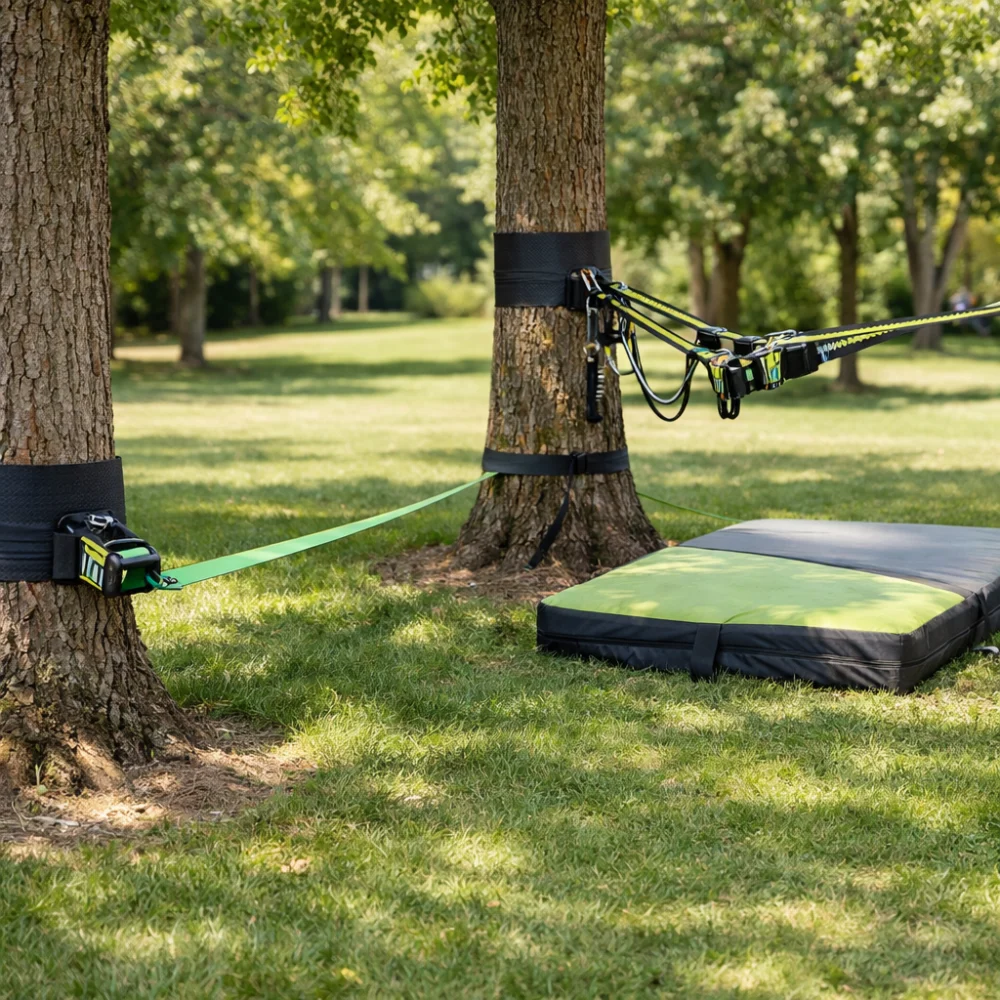
Trickline kits are aimed at people who want a slackline setup that feels responsive enough for dynamic movement rather than just straightforward walking practice. If you are comparing kits, the main question is not only how to get started, but how the line, tensioning and accessories affect the kind of use you want.
That makes this a choice about suitability as much as contents. A kit that works well for one space or style of use may feel too soft, too short or too involved for another, so it helps to compare the details carefully.
Because category names can sound similar, it also helps to separate trickline kits from beginner-focused or accessory-only slackline pages. The important step is to match the kit to the way you plan to use it, the space available and the level of setup confidence you have.
Compare Trickline Kits


As an Amazon Associate we earn from qualifying purchases.
What should you look for in a trickline kit?
The best starting point is to compare the kit as a complete setup rather than focusing on one part. Look at the line, the tensioning method, the hardware included and the intended use. A stronger emphasis on dynamic movement usually means the details matter more than they do for a simple recreational line. Specifications vary by model, so always check the individual product page before buying.
| Feature | What it means | Why it matters | What to check |
|---|---|---|---|
| Intended use | How the kit is designed to feel in use | Helps you judge whether it suits dynamic movement or more general slacklining | Any description of the kit’s intended style of use |
| Line characteristics | The main webbing or line included | Affects how responsive or stable the setup may feel | What the product page says about the line and its role in the kit |
| Tensioning setup | The method used to tighten and adjust the line | Influences setup effort and how finely you can tune feel | Which tensioning parts are included and how they are described |
| Included hardware | Any connectors, anchors or accessory parts supplied | Determines whether the kit is ready to use or needs extra items | The full contents list, not just the headline title |
| Space requirements | The practical area needed for use | Important for gardens, parks or other locations where space is limited | Any stated length guidance, setup notes or clearance needs |
| Skill level | The expected level of user familiarity | Helps avoid buying a kit that feels overly complex or too limited | Any wording about beginner, intermediate or advanced suitability |
Key decision criteria
Setup style
Some buyers want a kit that is straightforward to assemble, while others are happy to spend longer setting up in exchange for more tuning flexibility. If you are less experienced, ease of use may matter more than adjustment range. If you already know the feel you want, compare how much control the kit gives you over tension and setup.
Responsiveness versus stability
Trickline use often involves a more lively feel than relaxed walking lines, but that does not mean every kit should feel the same. A more responsive setup may be better for movement-focused use, while a steadier feel may suit those still developing confidence. The trade-off is usually between playfulness and predictability.
Complete contents
A kit can look suitable at first glance but still leave out something important. Check exactly what is included, especially if you want a self-contained setup rather than one that depends on extra parts. This is one of the easiest places for buyers to misread a title and assume more is included than really is.
Space and placement
Where you intend to use the kit matters as much as the kit itself. Gardens, parks and other open spaces can all present different practical limits, so compare the setup area you have with the space the kit is meant to occupy. If your space is tight, a kit that needs more room than expected can be frustrating even if it is otherwise a good match.
Product types and variants
Within this category, the most useful distinctions are usually about how complete the kit is and how specialised it is for trick-focused use.
- More complete kits are useful for buyers who want a more straightforward purchase and fewer separate decisions. Their limitation is that the included parts may not suit every preferred setup style.
- More specialised kits may suit buyers who already know the feel they want and are comfortable comparing the setup details. Their limitation is that they can be less intuitive for first-time buyers.
- Accessory-led kits can be attractive if you already understand the system and only need particular parts. Their limitation is that they may not be as simple for a beginner to assess at a glance.
Which kit suits which buyer?
| Buyer need | What to prioritise | What to avoid overlooking |
|---|---|---|
| First-time buyer | Clear contents, simple setup and obvious intended use | Assuming a kit is easy to use just because it is labelled as a kit |
| Experienced user | Adjustment range, setup feel and component detail | Buying a very basic package that leaves little room to tune the experience |
| Gift buyer | Obvious completeness and broad suitability | Choosing something too specialised without understanding the recipient’s setup needs |
| Space-limited buyer | Practical setup requirements and clear size information | Overlooking how much room the line and anchors need in real use |
| Buyer comparing upgrades | How the kit changes feel, control and completeness | Focusing only on one feature while ignoring the rest of the system |
Common mistakes and misunderstandings
- Assuming all kits are interchangeable. They are not. Compare the intended use and the contents rather than relying on the category name alone.
- Overlooking the full contents list. A product title can sound complete while the detail page shows a different level of inclusion.
- Choosing only by difficulty level. Ease of use matters, but so do setup space, tuning and the kind of movement the kit is meant to support.
- Ignoring where the kit will be used. A setup that looks ideal on paper may be awkward if the available space is limited or awkwardly shaped.
Safety and suitability caveats
Trickline kits are recreational products, but suitability still matters. Check that the intended user, location and setup space are all appropriate for the kit you are comparing. If the product page gives guidance on requirements or limitations, treat that information as part of the buying decision rather than an afterthought.
Maintenance, storage and ownership considerations
General care should focus on keeping the kit clean, dry and stored sensibly between uses. Hardware, webbing and tensioning parts may age differently depending on how often they are used and how they are handled, so it is worth looking at the materials and any care guidance supplied by the product page. If a kit includes multiple parts, a tidy storage routine can make repeat setup easier.
How to compare options efficiently
- Start with the way you plan to use the kit.
- Check whether the kit is meant for a more dynamic trick-focused setup or a simpler recreational one.
- Compare the contents carefully so you know what is included.
- Look at the setup requirements and think about your available space.
- Choose the option that matches your confidence level, not just the most feature-heavy listing.
Summary buyer decision checklist
- Does the kit match the style of use you want?
- Are the contents clearly listed and complete enough for your needs?
- Is the setup likely to suit the space you have available?
- Does the level of adjustment fit your experience and confidence?
- Have you checked any product-specific limitations on the detail page?
Frequently asked questions
Are trickline kits the same as beginner slackline kits?
Not usually. The two categories may overlap in parts of the market, but they are not the same buying choice. A trickline kit is generally judged more by how it supports movement and setup control, while a beginner kit is usually chosen for ease of use and straightforward practice.
Do I need a complete kit or just separate parts?
That depends on how much of the system you already have and how confident you are comparing compatible parts. A complete kit is often easier for a new buyer to assess, while separate parts can make sense if you already know exactly what you need. The key is to check the full contents carefully.
What matters more: the line or the hardware?
Both matter, because they affect different parts of the experience. The line influences the feel, while the hardware and tensioning parts affect setup and adjustment. Buyers usually get the best result by comparing the whole package rather than only the headline item.
How do I know if a kit will suit my space?
Look for any information about setup length, clearance or intended use area, then compare that with the space you actually have. It also helps to think about whether the location is fixed or temporary. If information is limited, treat that as a sign to inspect the product page carefully.
Is a more adjustable kit always better?
Not necessarily. More adjustment can be useful if you want to fine-tune the feel, but it may also mean a more involved setup. For some buyers, a simpler and clearer package is the better trade-off.
What should I check before buying as a gift?
Try to confirm that the kit is easy to understand at a glance, clearly listed and suitable for the recipient’s experience level. Gifts can be tricky when they are too specialised, so broader suitability and obvious completeness are helpful.
Ready to choose?
See all 13 Trickline Kits →As an Amazon Associate we earn from qualifying purchases.