

Fly tying materials are the building blocks of hand-tied flies, from hooks and thread to dubbing, feathers, hair, wire, chenille and finishing materials. If you are new to tying, the range can look broad quickly, so it helps to focus on what each material does rather than trying to buy everything at once.
This guide is for anglers who want to tie more consistently, replace worn-out supplies or choose materials for a specific fly style. The key decision is not only what looks right in the packet, but whether the material suits the size, profile, durability and ease of tying you need.
Because fly patterns vary widely, the most useful approach is to start with the flies you actually want to tie and work backwards from there. Specifications vary by model, so always check the individual product page before buying.
What should you look for in fly tying materials?
Start with the pattern and the effect you want on the water. Some materials build bulk quickly, some create a slim profile, some add movement and some are mainly for colour, segmentation or durability. The best choice is usually the one that matches the fly’s role with the least fuss at the vice.
| Feature | What it means | Why it matters | What to check |
|---|---|---|---|
| Material type | The basic category, such as thread, dubbing, feather, hair, wire or synthetic fibre. | Different materials create different silhouettes, movement and tying behaviour. | Confirm it suits the fly style you plan to tie. |
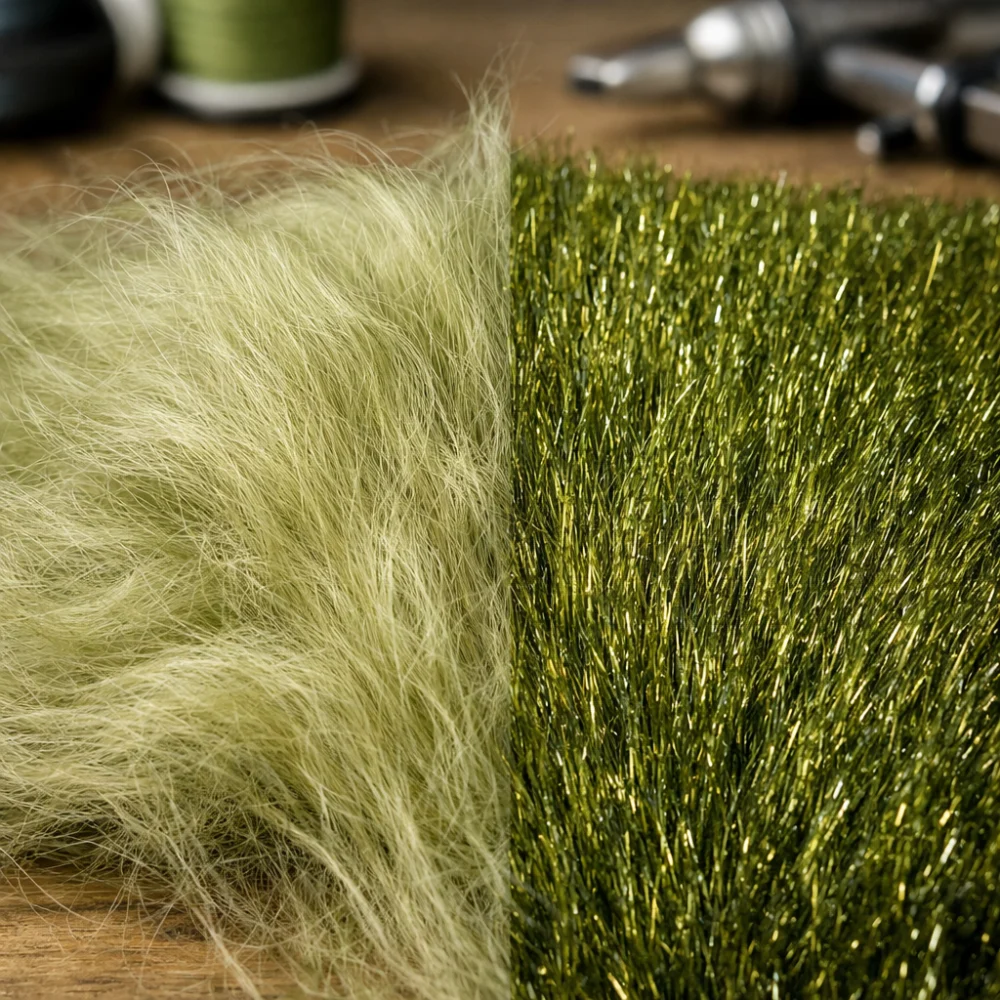
| Texture and density | How fine, coarse, soft, stiff, fluffy or compact the material feels. | This affects how easy it is to handle and how the finished fly sits in the water. | Look for descriptions that match the finish you want. |
| Size or length | The amount supplied or the size grade of the material. | It affects how many flies you can tie and whether the material is practical for small or large patterns. | Check the size or pack quantity on the product page. |
| Colour | The visible shade or blend. | Colour can change visibility, impression and pattern matching. | Compare the colour with the pattern you are tying, but expect some variation online. |
| Ease of use | How neatly the material cuts, wraps, traps or blends. | Easier materials reduce waste and make learning simpler. | Read the description for intended use and any notes on handling. |
| Durability | How well the material stands up to repeated use and fish teeth. | More durable materials can improve fly life, but may reduce softness or movement. | Balance toughness against the action you want from the fly. |
Key factors that affect the choice
Pattern fit
The most important question is whether the material suits the fly pattern you are tying. A dry fly, nymph, streamer or saltwater-style pattern can call for very different textures and densities, even when the colour looks similar. Choose for the job first, not just for appearance.
Handling at the vice
Some materials are straightforward to work with, while others need more control, trimming or preparation. If you are still learning, easier materials can help you build neat flies with less waste. If you already have experience, you may prefer materials that give finer control over shape and finish.
Profile and movement
Materials affect whether a fly looks slim, bushy, bulky or mobile. That matters because fly shape can be as important as colour. A compact material may help with neat proportions, while a softer one may create more movement in the water.
Durability versus finesse
Tougher materials often last longer, but they may not give the same delicate finish as softer options. Finer-looking materials can produce a more realistic result, but they may be less robust. The right balance depends on whether you value presentation, resilience or a compromise between the two.
Pack size and waste
Some materials are used sparingly, while others disappear quickly during practice or when tying larger flies. Think about how often you tie that pattern and whether a smaller pack is enough to learn with or a larger one makes more sense for regular use.
Common material types and how they are used
Fly tying materials are usually chosen by function. Thread and wire are structural; dubbing, chenille and synthetic fibres help build body and movement; feathers and hair often define wings, tails or hackles; finishes and adhesives help secure the fly. The practical question is how each material contributes to the final pattern rather than whether it is useful in isolation.
- Thread: useful for securing materials and shaping the body of the fly.
- Dubbing: helps create body texture and can add a more natural or fuzzy finish.
- Feathers and hackle: often used for movement, support or a lifelike outline.
- Hair and fur: can create buoyancy, bulk or a distinctive silhouette.
- Wire and tinsel: add segmentation, shine or reinforcement.
- Synthetic fibres: often chosen for consistency, movement and visibility.
Which materials suit different tying needs?
| Buyer need | Materials to consider | Why they may suit you | Trade-off to keep in mind |
|---|---|---|---|
| Beginner building a first kit | General-purpose thread, easy dubbing, straightforward synthetic fibres and a small selection of common trims. | These tend to be more versatile and easier to learn with. | You may not get the most specialised finish for every pattern. |
| Angler tying a specific pattern | Pattern-matched body, wing, ribbing or finishing materials. | Helps you reproduce a fly more accurately. | Less flexible if you later change patterns. |
| Angler wanting durable flies | Reinforcing materials such as wire, tougher thread or resilient synthetic components. | Can improve longevity and reduce re-tying. | May add bulk or reduce a delicate look. |
| Angler focused on movement | Soft hackles, mobile fibres and materials that pulse or breathe in the water. | Can create a more animated fly profile. | May be less tidy or less durable than stiffer options. |
| Pattern builder for small flies | Fine thread, compact dubbing and slim body materials. | Helps keep proportions under control. | Finer materials can be harder to handle cleanly. |
Common mistakes and misunderstandings
- Buying by colour alone: colour matters, but texture, density and handling often matter more once you start tying.
- Choosing materials that are too bulky: oversized material can throw off proportions and make a fly harder to finish neatly.
- Assuming one material fits every pattern: a material that works well for one fly style may be awkward or unsuitable for another.
- Overlooking pack size: small packs can be fine for testing, but regular tyers may need enough material to make the learning curve worthwhile.
- Ignoring handling qualities: a visually appealing material is not always easy to trap, wrap or trim at the vice.
Safety and suitability checks
Fly tying materials are generally chosen for crafting rather than operating risk, but suitability still matters. Check whether a material is intended for the fly style and size you want, and make sure any sharp tools, adhesives or finishes used with it are handled appropriately. If a material smells strongly, sheds excessively or behaves unexpectedly, it may be better to choose a different option for your tying setup.
Maintenance, storage and lifespan
Materials last longer when stored dry, clean and out of direct sunlight where possible. Feathers, hair and synthetics can lose condition if they are crushed or left exposed, and some consumables may be used faster than you expect once you begin tying regularly. Buying with storage space and typical use in mind can help you avoid waste.
How to compare options efficiently
- Decide which flies you want to tie most often.
- Identify the material type that does the main job in that pattern.
- Compare texture, density, size and handling rather than looking at colour alone.
- Think about the trade-off between realism, durability and ease of use.
- Check the individual product page for the exact size, pack details and any pattern notes.
Summary buyer decision checklist
- Does the material suit the fly pattern you want to tie?
- Is the texture or density appropriate for the finish you want?
- Will the material be easy enough for your skill level?
- Does the pack size match how often you expect to use it?
- Is the balance right between durability, movement and appearance?
- Have you checked the individual product page for the exact details?
Frequently asked questions
What are the most important fly tying materials to start with?
Most beginners start with a small set of versatile basics: tying thread, a few body materials, some dubbing and a couple of accent or ribbing materials. That gives you enough flexibility to practise proportions and technique without overbuying. The best starting point is to match the materials to the flies you actually plan to tie first.
How do I know if a material is suitable for a dry fly or a nymph?
Look at the intended effect in the description and the material’s texture, density and behaviour. Dry flies usually call for materials that help with a neat, controlled profile and suitable buoyancy, while nymphs often use materials that help create body shape, segmentation and a natural sink rate. The pattern usually tells you more than the name of the material alone.
Is natural material always better than synthetic material?
Not necessarily. Natural materials can give a traditional look and feel, while synthetic materials often offer consistency, durability or easier handling. The better choice depends on the pattern, the finish you want and how much tying convenience matters to you.
Should I buy small packs or larger quantities?
Small packs are useful if you are trying a new material or tying only occasional flies. Larger quantities can make sense if you tie the same pattern regularly and know the material suits your setup. Consider how fast you tie, how much you practise and how much storage space you have.
Do colour names always match the material exactly?
Not always, especially when viewed on a screen. Lighting, display settings and natural variation in materials can all affect appearance. If a precise shade matters to your pattern, read the description carefully and compare it with the fly you are trying to recreate.
What if I am choosing materials for a gift?
If you are buying for someone else, general-purpose and easy-to-use materials are usually safer than niche items. It helps to know whether they tie small dries, nymphs, streamers or saltwater-style patterns, but if you are unsure, versatile basics are usually the least risky choice.
Do I need specialist materials for every pattern?
No. Many flies can be tied with a sensible core selection plus a few pattern-specific items. Specialist materials become more useful when you want a close match to a specific pattern, a more refined finish or a particular effect that general materials cannot easily create.