


A bike cassette is a key part of the drivetrain, and the right choice affects how easy it feels to climb, cruise and keep a comfortable cadence. For most buyers, the main job is not choosing the most advanced-looking option, but making sure the cassette suits the rest of the bike.
This guide helps you compare cassette options without getting lost in jargon. It focuses on the practical checks that matter most: drivetrain compatibility, gear range, speed count and everyday maintenance.
If you are replacing a worn cassette, upgrading for different riding, or matching a new chain and rear derailleur, it is worth checking the details carefully. Specifications vary by model, so always check the individual product page before buying.
Compare Bike Cassettes


As an Amazon Associate we earn from qualifying purchases.
What should you look for in a bike cassette?
The best starting point is compatibility. A cassette has to work with the rest of the drivetrain, especially the chain, rear derailleur and shifter system. After that, compare the gear range and the number of speeds, because those choices affect both riding feel and whether the cassette suits your terrain.
It also helps to think about use rather than appearance. A cassette for flatter rides may feel different from one designed to make climbing easier, and the trade-off is usually between finer gear steps and a wider spread of gears.
| Feature | What It Means | Why It Matters | What To Check |
|---|---|---|---|
| Speed count | The number of sprockets on the cassette | Must match the rest of the drivetrain system | Confirm it suits your chain, shifter and rear derailleur setup |
| Gear range | The spread between the easiest and hardest gears | Influences climbing ease and top-end cadence | Look at the smallest and largest sprocket sizes listed |
| Spacing between gears | How closely the sprockets are spaced | Affects how smoothly you can choose a preferred cadence | Compare whether you want tighter steps or wider jumps |
| Freehub compatibility | The body type the cassette fits onto | If it does not fit the hub, it will not install correctly | Check the hub standard and cassette interface on the product page |
| Intended riding use | How the gearing is aimed to be used | Helps match the cassette to road, mixed terrain or climbing needs | Think about your usual terrain and riding style |
Key decision criteria
Compatibility with your drivetrain
This is the first filter. A cassette must work with the rest of the system, and that means confirming the speed count and the hub or freehub standard. If the cassette does not match the bike’s drivetrain, the rest of the buying decision becomes irrelevant.
When checking compatibility, do not rely on appearance alone. A cassette can look broadly similar while still differing in fit or intended drivetrain use.
Gear range and climbing ability
Gear range is one of the most practical choices. A wider range can make climbing easier, while a narrower range can give smaller jumps between gears. The trade-off is usually between easier low gears and more precise cadence control across the middle of the range.
If you ride hilly routes or carry extra load, a wider range may be more relevant than close spacing. If you mostly ride flatter roads and want smooth cadence changes, you may value tighter steps more.
Number of speeds
More speeds can mean closer spacing between gears, but they also need to suit the rest of the drivetrain. Fewer speeds may be simpler and more forgiving, while more speeds can give a more finely tuned gear spread. The right answer depends on how the bike is already built and what you want it to do.
Wear and replacement timing
Cassettes are wear items, so shoppers often buy them as part of a maintenance refresh. If a cassette is being replaced because shifting has deteriorated, it is sensible to check whether the chain is also worn, since mismatched wear can affect performance.
Types and variants you may see
Bike cassettes are usually compared by their gear range, number of speeds and intended drivetrain setup rather than by dramatic styling differences. That means the important variants are mostly functional, not cosmetic.
- Closer-range cassettes: suited to riders who want smaller jumps between gears and a more consistent cadence.
- Wide-range cassettes: suited to riders who want easier climbing gears or a broader spread for varied terrain.
- Replacement cassettes: chosen to match an existing drivetrain closely, especially when keeping the current setup familiar.
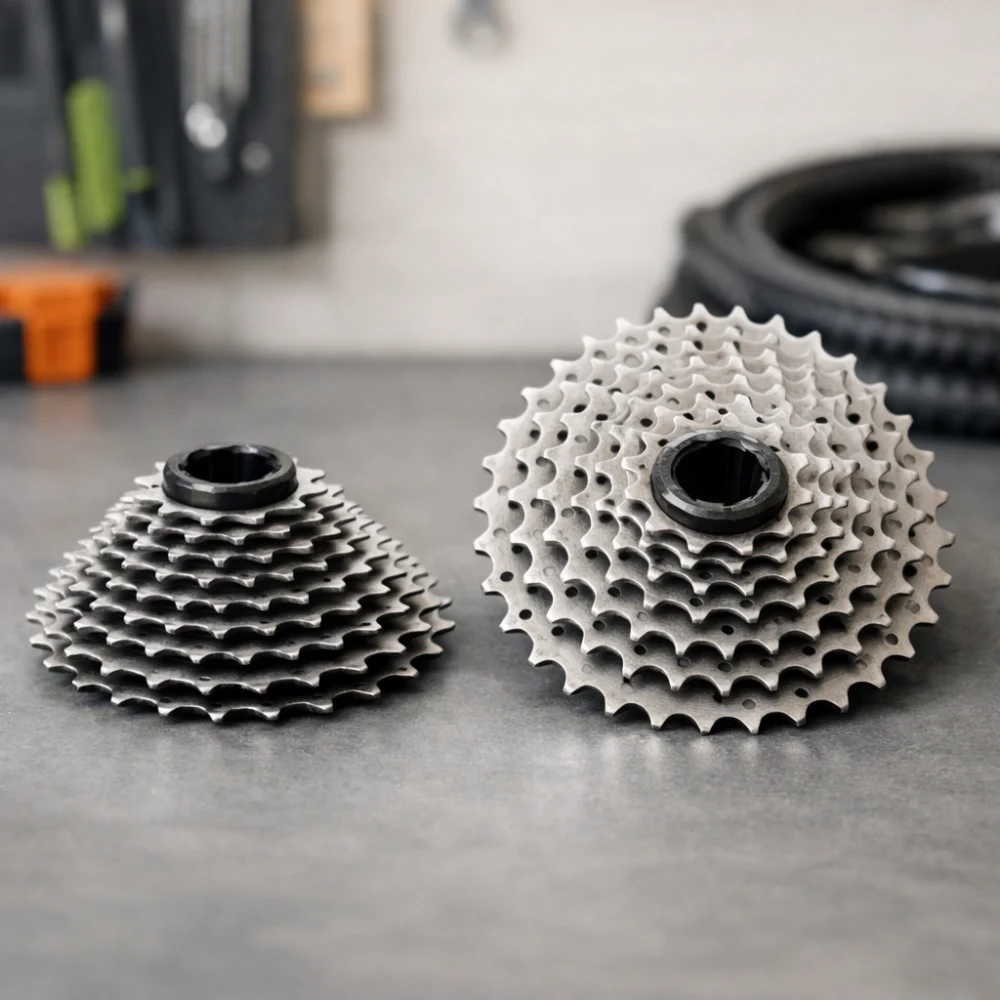
The main limitation is that a cassette type that suits one bike can be the wrong choice for another if the drivetrain standard or intended gearing is different.
Which cassette suits which buyer?
| Buyer need | What to prioritise | Why |
|---|---|---|
| Replacing a worn cassette | Exact compatibility and similar gearing | It helps preserve the feel of the bike and reduces the chance of mismatched parts |
| Hilly riding | Wider gear range and easier low gears | Lower gears can make steep sections less demanding |
| Flat or steady-paced riding | Closer gear spacing | Smaller jumps can make it easier to hold a chosen cadence |
| Mixed terrain or bikepacking use | Practical range and dependable compatibility | Varied routes often benefit from flexible gearing rather than a narrow focus |
| Upgrading a bike | Drivetrain match and intended ride feel | An upgrade only helps if it fits the existing setup and suits the way you ride |
Common mistakes and misunderstandings
- Assuming all cassettes fit the same way: fit depends on the drivetrain and hub standard, not just the number of sprockets.
- Focusing only on speed count: two cassettes can have the same number of speeds but different gear ranges and different ride feel.
- Ignoring the chain: a new cassette may not perform well if the chain is worn or mismatched.
- Choosing for the wrong terrain: gearing that feels fine on short rides may feel too hard or too tightly spaced on longer or hillier routes.
Safety and suitability caveats
A cassette is a mechanical part, so the main buying concern is suitability rather than danger. The key check is whether the cassette matches the rest of the drivetrain and the kind of riding you plan to do. If you are unsure, compare the individual product page details carefully before buying.
Maintenance, storage and lifespan considerations
Cassettes are influenced by wear, cleaning and how well the chain is maintained. A well-kept drivetrain often makes replacement decisions easier to plan, while a neglected one can wear parts unevenly. Storage is usually straightforward, but it is still sensible to keep parts clean, dry and protected from unnecessary grime.
If you are comparing options for long-term use, think about how easy the cassette will be to maintain alongside the chain and other drivetrain parts.
How to compare options efficiently
- Start with the bike you already have and identify the drivetrain type.
- Check cassette compatibility first, especially speed count and hub fit.
- Decide whether you need a wider gear range or closer gear spacing.
- Compare the likely riding terrain and how much climbing support you want.
- Read the individual product page for the exact details before choosing.
Summary buyer decision checklist
- Does the cassette match your drivetrain speed count?
- Will it fit the hub or freehub standard on the bike?
- Does the gear range suit your terrain and riding style?
- Are you replacing like for like, or deliberately changing the ride feel?
- Should the chain be checked at the same time?
- Have you confirmed the individual product page details before buying?
Frequently asked questions
How do I know if a cassette is compatible with my bike?
Start by checking the drivetrain speed count and the hub or freehub standard. Those are the most important compatibility points, because a cassette that does not fit the system will not work properly. The safest approach is to compare the product page details against the bike’s existing setup.
What is the difference between a wide-range and a close-range cassette?
A wide-range cassette gives you a bigger spread between the easiest and hardest gears, which can help on climbs. A close-range cassette gives smaller steps between gears, which can make cadence control feel smoother. The right choice depends on whether you value climbing support or tighter gear spacing.
Should I replace the chain when I replace the cassette?
Often it is sensible to check both together, because wear in one part of the drivetrain can affect the other. A worn chain can contribute to poor shifting or accelerated cassette wear. The exact decision depends on how much wear is present and how the rest of the drivetrain is performing.
Can I change to a cassette with a different gear range?
Sometimes yes, but only if it remains compatible with the rest of the drivetrain. A different range can change how the bike feels on hills and on flatter sections. It is worth checking whether the new range suits your rear derailleur and riding needs before committing.
Do more speeds always mean a better cassette?
Not necessarily. More speeds can offer finer gear steps, but the right choice depends on compatibility and the way you ride. A cassette with fewer speeds can still be the better option if it matches your drivetrain and terrain.
What should I check if my bike shifts poorly after a cassette change?
First, make sure the cassette matches the drivetrain and that the chain is in suitable condition. Shifting issues can come from several parts working together, not just the cassette itself. If the details do not line up, re-check the product page and the bike’s existing specification.
Distinguishing a cassette from a threaded freewheel
These terms are sometimes used loosely in product descriptions, but a cassette and a threaded freewheel are different types of rear sprocket assembly. A cassette fits onto a compatible freehub body, while a freewheel screws onto a threaded hub. The mounting type matters: matching the number of speeds alone does not confirm that a part will fit.
For a replacement, check the bike’s existing rear-wheel interface and compare it with the product’s stated mounting type. If the description is unclear, confirm the exact part type before choosing rather than relying on the word “cassette” in a title.
Can I use a threaded freewheel instead of a cassette?
Not as a direct swap simply because the number of sprockets is similar. The two use different hub interfaces, so first identify which type the wheel is designed for and check that the replacement explicitly matches it.
More Bike Cassettes
See all 64 Bike Cassettes →


As an Amazon Associate we earn from qualifying purchases.