


Fish finders are chosen for clarity, compatibility and how easily they fit the way you fish. The right choice depends less on brand language and more on how you plan to use the display, transducer and sonar information on the water.
This guide helps you compare the main features without getting lost in technical terms. It is especially useful if you are replacing an older unit, fitting electronics to a new boat or deciding how much functionality you actually need.
Because fish finders vary widely by model, it helps to focus on the parts that affect day-to-day use: screen readability, mounting, sonar options and whether the transducer suits your hull and fishing style.
Compare Fish Finders


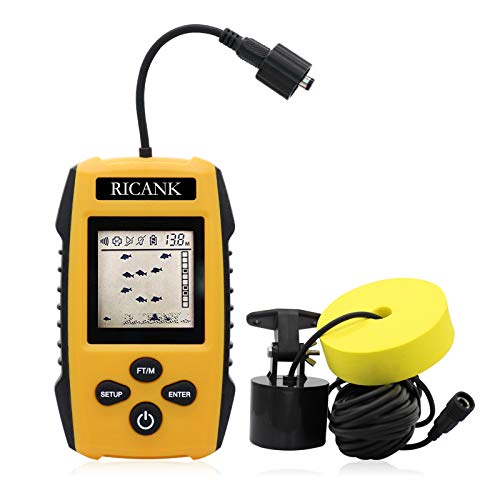


As an Amazon Associate we earn from qualifying purchases.
What should you look for in a fish finder?
Start with the way you will use it most often. If you mainly want basic depth and fish-marking information, a simpler unit may be enough, while anglers who want clearer bottom detail or more navigation support may prefer a more capable display and sensor setup. The most useful choice is usually the one that matches your boat, your water conditions and how much information you want to interpret while underway. Specifications vary by model, so always check the individual product page before buying.
| Feature | What It Means | Why It Matters | What To Check |
|---|---|---|---|
| Screen size and visibility | The display area and how easy it is to read in daylight | Helps you see detail quickly without straining or zooming too much | Screen size, brightness and whether the layout suits your viewing position |
| Sonar type | The kind of underwater information the unit can present | Different sonar styles suit different water, depths and fishing approaches | Which sonar functions are included and whether they suit your target waters |
| Transducer compatibility | How the sensor connects to the unit and how it is mounted | The wrong transducer can limit performance or make installation awkward | Mounting style, connection type and whether a transducer is included |
| Mounting and portability | How the unit is fixed in place or moved between boats | Important for small boats, temporary setups and shared craft | Fixed mount, portable kit or a setup that fits your helm space |
| Power and wiring | How the unit is powered and how much installation it needs | Affects ease of fitting and how neat the final setup will be | Power requirements, cable lengths and whether your boat can support the installation |
| Extra navigation features | Added functions beyond basic fish finding | Useful if you want route context or wider marine electronics integration | Only the functions you will actually use, rather than features that add cost without value |
Key decision criteria
Display and readability
A clear screen can matter more than a long list of functions. If you fish in bright daylight or often glance at the display from a standing position, readability is a practical priority. Think about screen size, contrast and how easy the menus seem to use, because a feature-rich unit is less helpful if you cannot read it quickly.
Sonar features and depth detail
Fish finders can vary in how they present underwater structure, bottom shape and moving targets. More detail can be useful, but it can also make the display more complex to interpret. The main question is whether you want straightforward information or a richer view that takes more setup and familiarisation.
Transducer fit and installation
The transducer is central to how the unit works, so this is one of the most important checks. Confirm whether the product is sold with a transducer and whether the mounting style suits your hull or mounting location. If the fit is wrong, even a good display may not deliver the result you expected.
Mounting style and boat size
Some buyers need a compact setup for a small craft, while others want a fixed helm installation. The physical layout of your boat affects where the screen can go, how cables route and how visible the display will be while operating the boat. A neat fit is often more important than choosing the largest possible screen.
Types and variants within the category
Within this category, the most useful way to think about variants is by level of complexity and installation approach.
- Basic fish finders focus on core depth and fish-marking functions and may suit simpler needs or first-time buyers.
- More advanced units may offer additional sonar presentations and more detailed displays for users who want greater interpretation.
- Portable-style options can suit small boats or temporary use where easy moving matters more than a permanent installation.
- Fixed-mount units are better when you want a more permanent helm setup and a tidier cable arrangement.
These are broad buying patterns rather than fixed product promises. The important point is to choose the type that matches your boat and the amount of information you want to manage on screen.
Which type suits different buyers?
| Buyer need | What usually matters most | Why that helps |
|---|---|---|
| First-time buyer | Simple controls, clear display and straightforward sonar | Makes it easier to learn without paying for functions you may not use |
| Upgrading an older unit | Screen readability, mounting compatibility and installation effort | Helps ensure the new unit is an improvement rather than a wiring problem |
| Small-boat owner | Compact size, tidy mounting and practical power needs | Space and installation constraints matter more on smaller craft |
| Angler wanting more detail | More advanced sonar presentation and a screen that can show detail clearly | Useful when you spend time interpreting bottom structure and target movement |
| Shared or temporary setup | Portability and easy removal | Makes the unit more convenient when it is not staying on one boat |
Common mistakes and misunderstandings
- Choosing by feature count alone. A long feature list does not help if the display, sonar and mounting do not suit your boat.
- Overlooking the transducer. The sensor is not a minor accessory; it is central to how the unit performs and installs.
- Assuming all screen sizes feel the same on the water. Visibility changes with angle, glare and where the unit is mounted.
- Buying for features you may never use. Extra functions can add complexity, so decide what you will realistically need.
- Ignoring installation space. A unit that looks ideal on paper may be awkward once you check helm space and cable routing.
Safety and suitability caveats
Fish finders are buying aids, not guarantees. They can help you interpret underwater conditions, but they should not replace sensible boating judgement, local knowledge or awareness of changing conditions. Check that the unit is suitable for your boat type, mounting location and intended waters before you buy.
Specifications vary by model, so always check the individual product page before buying.
Maintenance, storage and ownership considerations
Most buyers should think about how the unit will be protected when not in use, especially if the boat is exposed to weather. Displays, cables and transducers can all benefit from sensible care and regular checking. If a unit is portable, storage and removal may matter more; if it is fixed, cable routing and clean mounting become more important.
It is also worth considering how easy the system will be to keep tidy over time. A simpler setup may be easier to maintain, while a more feature-rich one may need a little more attention to keep everything working as expected.
How to compare options efficiently
- Decide whether you need a basic, portable or fixed installation.
- Check the display for readability and whether the layout suits your boat.
- Confirm the transducer and mounting approach are compatible with your setup.
- Compare only the sonar and extra features you will actually use.
- Read the individual product page carefully for model-specific details.
Buyer checklist
- Does the screen look easy to read in your intended mounting position?
- Is the sonar style appropriate for how and where you fish?
- Does the transducer suit your hull or chosen mounting point?
- Will the unit fit the space you have available at the helm?
- Are the power and wiring needs realistic for your boat?
- Are you paying for features you are unlikely to use?
- Have you checked the individual product page for model-specific details?
Frequently asked questions
Do I need a very advanced fish finder?
Not always. Many buyers are better served by a clear, easy-to-use unit that matches their boat and fishing style than by a feature-heavy model. The key is to choose a level of detail you will actually understand and use.
Is the transducer really that important?
Yes, because it is central to how the unit gathers information. A mismatch between the unit and the transducer can affect installation and the overall result, so it is one of the first things to check.
Are larger screens always better?
Not necessarily. A bigger display can be easier to read, but it also needs space and may be unnecessary on a small boat. The best screen is the one you can see clearly from where you sit or stand.
Can one fish finder suit every boat?
No single model suits every setup. Boat size, helm space, power arrangements and mounting preferences can all change what makes sense.
What is the main difference between simple and more advanced models?
Simple models usually focus on straightforward readings and easier operation, while more advanced ones may provide additional sonar detail or extra functions. The right choice depends on how much information you want and how comfortable you are interpreting it.
Should I consider portability?
If you use more than one boat, launch from different locations or want an easier setup to move and store, portability can be useful. If the unit will stay in one place, a fixed installation may be more practical.
Transducer mounting and connection choices
Transducer fit involves more than checking that a sensor is included. Common mounting approaches include transom-mounted, through-hull and trolling-motor installations, but suitability depends on the boat, hull and intended position. Check the product information for the supported mounting method and any requirements for your particular setup before choosing.
Wired and wireless arrangements can also differ in installation and use. A wired connection may involve routing a cable between the transducer and display, while a wireless setup avoids that cable but depends on the connection and power arrangements specified for the individual product. Consider where you will place the sensor and display, and check how the chosen unit connects and is powered.
Fish finding or navigation?
A fish finder presents sonar information, while a chartplotter is primarily used to view navigation charts and position. Some marine displays may combine functions, but do not assume that a fish finder includes charting or navigation features. If you want both, check that the individual product explicitly provides the functions you need.
More Fish Finders
See all 76 Fish Finders →



As an Amazon Associate we earn from qualifying purchases.